
Author
Mega AIPublished
Mar th, 2026Category
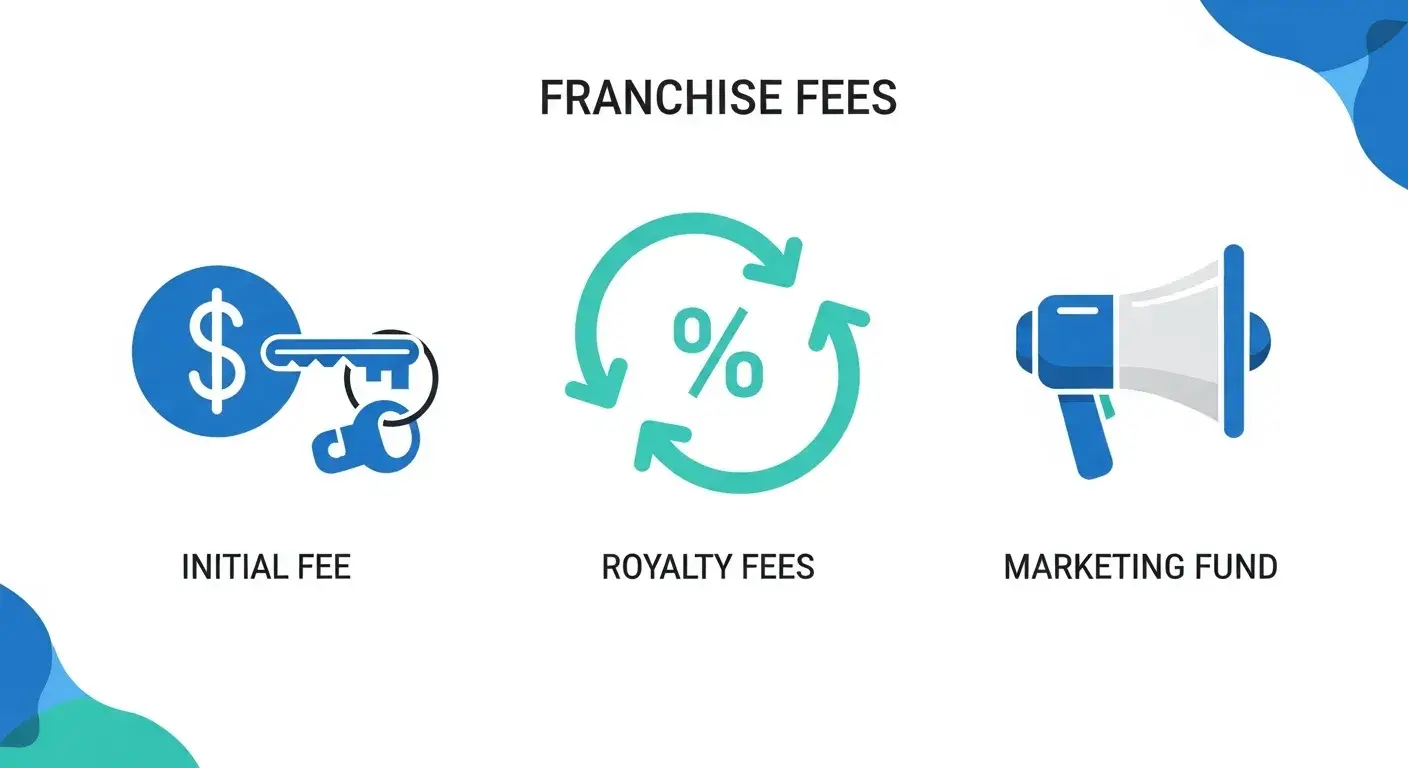
GuidesBuying a franchise is one of the fastest paths to business ownership, but the price tag involves more than a single check. Between the initial franchise fee, ongoing royalties, marketing contributions, and technology costs, the total franchise cost can look very different from the number on a franchisor’s brochure. This guide breaks down every fee you should expect, what each one actually pays for, and how to evaluate whether the investment is worth it.
Key Takeaways
- A franchise fee is a one-time upfront payment (typically $20,000 to $50,000) that grants you the right to operate under an established brand.
- Royalty fees are ongoing payments, usually 4% to 8% of gross sales, paid monthly or quarterly for the life of the franchise agreement.
- Marketing fund contributions, technology fees, renewal fees, and transfer fees add layers to the total franchise cost.
- The initial franchise fee is only one line item in a much larger estimated initial investment.
- Reviewing the Franchise Disclosure Document (FDD) before signing is essential for understanding every fee obligation.
What Is a Franchise Fee?
A franchise fee is a one-time payment a franchisee makes to a franchisor in exchange for the right to operate a business under the franchisor’s brand, trademarks, and proven business systems. Think of it as your entry ticket to a tested business model.
When you pay this upfront fee, you are purchasing access to:
- Brand licensing — the legal right to use the franchisor’s name, logo, and trademarks
- Training programs — initial onboarding covering operations, marketing, hiring, and customer service
- Site selection assistance — support choosing a location, negotiating leases, and planning buildouts
- Operating systems — proprietary software, manuals, and standard operating procedures
- Opening marketing — branded materials and launch campaigns to generate awareness in your market
This upfront cost is separate from your total startup costs. It is one component of the estimated initial investment listed in the franchisor’s FDD, which also includes real estate, equipment, inventory, and working capital.
How Much Is the Average Initial Franchise Fee?
Across all industries, the average initial franchise fee ranges from $20,000 to $50,000. However, these amounts vary significantly based on the brand, industry, and level of support provided.
Here is a breakdown of average franchise fees by industry:
| Industry | Average Initial Franchise Fee | Notes |
|---|---|---|
| Fast Food / QSR | $35,000 – $45,000 | High demand; established supply chains |
| Retail | $10,000 – $25,000 | Lower fees for lesser-known brands |
| Health & Fitness | $25,000 – $60,000 | Wide range based on facility size |
| Hotel / Hospitality | $50,000 – $75,000+ | Per-room fees common in this sector |
| Home Services | $15,000 – $50,000 | Lower overhead, service-based models |
| Salon Suite / Beauty | $25,000 – $50,000 | Real-estate-based recurring revenue models |
Several factors influence where the initial fee falls within these ranges:
- Brand recognition — established, nationally recognized brands command higher amounts
- Territory size — larger exclusive territories often require higher upfront payments
- Support level — more comprehensive training, technology, and marketing support increases the cost
- Industry demand — high-demand sectors with proven profitability attract premium pricing
What Is a Royalty Fee?
A royalty fee is an ongoing payment franchisees make to the franchisor, typically calculated as a percentage of gross sales. Unlike the one-time upfront fee, royalties recur for the entire life of the franchise agreement.
Most franchise systems charge royalty fees between 4% and 8% of gross revenue. Some key details:
- Percentage-based royalties (most common) — you pay a set percentage of your monthly or quarterly gross sales, regardless of profitability. If you gross $100,000 in a month with a 6% royalty, you owe $6,000.
- Flat-fee royalties — less common, typically found in service-based franchises. You pay a fixed monthly amount (for example, $500/month) no matter how much revenue you generate.
- Sliding-scale royalties — some franchisors reduce the percentage as your revenue increases, rewarding growth.
What Royalty Fees Pay For
Your royalty fee funds the franchisor’s ongoing investment in the system, including:
- Continued brand development and national reputation management
- Ongoing operational support and field visits
- System-wide technology upgrades and innovation
- Research and development of new products or services
- Franchise network coordination and quality assurance
The royalty structure aligns the franchisor’s interests with yours: when your location generates more revenue, the franchisor earns more. This creates a financial incentive for the franchisor to actively support your success.
Marketing and Advertising Fund Fees
Beyond the royalty fee, most franchise systems require contributions to a national or regional advertising fund. These fees typically range from 1% to 5% of gross sales.
Important distinctions:
- National ad fund contributions pay for brand-level marketing: national digital campaigns, TV advertising, social media presence, and PR. This marketing benefits all franchisees by strengthening overall brand awareness.
- Local marketing requirements are separate. Many franchisors require franchisees to spend an additional 1% to 3% on local advertising specific to their territory.
- Co-op advertising — some systems pool local marketing dollars regionally, allowing franchisees in the same market to fund joint campaigns.
The marketing fund is typically managed by the franchisor, and franchisees may have limited control over how the money is spent. When evaluating a franchise, ask how the ad fund is structured, what reporting franchisees receive, and whether the fund is audited.
Technology Fees
Technology fees are an increasingly common cost in modern franchise systems. Expect to pay $200 to $800 per month for mandatory proprietary technology, which may include:
- Point-of-sale (POS) systems
- Customer relationship management (CRM) software
- Booking, scheduling, or reservation platforms
- Inventory management tools
- Franchisee dashboards and reporting portals
Some franchisors bundle technology into the royalty fee, while others charge it separately. Either way, factor this into your monthly operating budget. The advantage is that franchise-provided technology is typically pre-configured, supported, and updated by the franchisor, reducing the need for independent IT management.
Hidden Franchise Costs Most Buyers Overlook
The initial fee and royalties get most of the attention, but several other costs can impact your total investment:
Renewal Fees
When your franchise agreement expires (typically after 10 to 20 years), you will likely pay a renewal fee to extend the relationship. This is usually a reduced percentage of the original upfront fee, often 25% to 50%.
Transfer Fees
If you decide to sell your franchise, the franchisor typically charges a transfer fee to approve the new buyer and facilitate the transition. Transfer fees can range from $5,000 to $15,000 or more.
Audit Fees
Franchisors reserve the right to audit your books. If discrepancies are found, you may be responsible for covering the cost of the audit.
Required Renovations
Many franchise agreements include mandatory renovation or refresh requirements every 5 to 10 years to keep locations aligned with updated brand standards.
Insurance Requirements
Franchisors typically require specific types and levels of insurance coverage, which may exceed what you would carry independently.
Supply Chain Markups
Some franchisors require you to purchase inventory, products, or supplies exclusively from approved vendors, which may carry markups compared to open-market alternatives.

Total Franchise Cost Breakdown: A 5-Year View
To understand the true franchise cost, project all fees over the first five years. Here is a realistic example based on industry averages for a mid-range franchise:
| Cost Category | Year 1 | Years 2-5 (Annual) | 5-Year Total |
|---|---|---|---|
| Initial Franchise Fee | $35,000 | — | $35,000 |
| Buildout & Equipment | $150,000 | — | $150,000 |
| Working Capital (3 months) | $30,000 | — | $30,000 |
| Royalty Fee (6% of gross) | $36,000 | $42,000 | $204,000 |
| Marketing Fund (2%) | $12,000 | $14,000 | $68,000 |
| Technology Fees | $6,000 | $6,000 | $30,000 |
| Local Marketing | $8,000 | $8,000 | $40,000 |
| Insurance & Licenses | $5,000 | $5,000 | $25,000 |
| Total | $282,000 | $75,000/yr | $582,000 |
Based on a hypothetical franchise generating $600,000 in Year 1 gross revenue, growing to $700,000 by Year 5.
The initial fee ($35,000) represents just 6% of the five-year total. The ongoing costs, particularly royalties, make up the largest share. This is why evaluating the full cost structure matters far more than comparing upfront fees alone.
Are Franchise Fees Tax Deductible?
Franchise fees have specific tax treatment:
- The initial franchise fee is considered an intangible asset and must be amortized over 15 years under IRS Section 197. You cannot deduct the full amount in the year you pay it.
- Royalty fees are treated as ordinary business expenses and are fully deductible in the year they are paid.
- Marketing fund contributions are also deductible as advertising expenses.
- Technology fees are deductible as operating expenses.
Consult a tax professional or franchise accountant to maximize your deductions and understand how franchise costs affect your overall tax position.
How to Evaluate Franchise Fees Before You Invest
Not all franchise fees are created equal. A higher fee does not automatically mean a better opportunity, and a low fee may signal limited support. Here is how to evaluate costs critically:
1. Read the Franchise Disclosure Document (FDD)
The FDD is your most important tool. Focus on:
- Item 5 — Initial franchise fee details
- Item 6 — Other fees (royalties, marketing, technology, transfer, renewal)
- Item 7 — Estimated initial investment range
- Item 19 — Financial performance representations (if provided)
2. Calculate Your Total Investment
Add every cost from Items 5, 6, and 7. Project them over your agreement term. Compare the total cost to your available capital and expected revenue.
3. Talk to Existing Franchisees
The FDD includes a list of current and former franchisees. Call them. Ask about their actual costs, whether the franchisor delivers on promises, and what surprised them financially.
4. Compare Within Your Industry
Use industry benchmarks to determine whether a franchise’s fees are competitive. A royalty fee of 10% in an industry where 5% is standard requires strong justification.
5. Assess the Value Behind the Fee
Higher fees are justified when they fund exceptional training, marketing, technology, and support. Lower fees may mean you are on your own for more of the heavy lifting.
What Makes a Franchise Investment Transparent
Transparency in franchise fees signals a franchisor that respects its franchisees and operates with integrity. When evaluating franchise opportunities, look for brands that:
- Publish a detailed investment breakdown with line-item costs
- Provide a comprehensive FDD with clear Item 19 earnings data
- Offer direct access to existing franchisees for validation
- Explain exactly what each fee funds and how those dollars support your success
Salons by JC is a salon suite franchise that has been franchising since 2011, backed by over 25 years of brand history. The franchise operates a semi-absentee model with a full-time onsite Concierge Manager at every location, a differentiator that directly supports franchisee operations. Their investment page provides a complete line-item breakdown of the estimated initial investment, giving prospective franchisees clarity on exactly where their capital goes.
For investors exploring the beauty and wellness franchise sector, understanding how salon suite franchise costs compare to traditional salon models is an important part of the evaluation process.
Frequently Asked Questions
What is a franchise fee?
A franchise fee is a one-time upfront payment made to a franchisor for the right to operate a business under their brand, access their training and support systems, and use their trademarks and proprietary processes.
How much does a franchise cost in total?
The total franchise cost includes the initial franchise fee, buildout and equipment, working capital, and ongoing fees like royalties and marketing contributions. Depending on the industry, total initial investments range from $50,000 for service-based franchises to over $1 million for real-estate-intensive models.
What is the difference between a franchise fee and a royalty fee?
The franchise fee is a one-time upfront payment to join the system. The royalty fee is an ongoing payment (usually 4% to 8% of gross sales) made throughout the life of the agreement. The franchise fee buys entry; royalties fund ongoing support.
Are franchise fees negotiable?
Rarely for single-unit buyers. Franchisors typically maintain standard fee structures. However, multi-unit or area development agreements may offer reduced per-unit fees or other financial incentives.
What should I look for in a Franchise Disclosure Document?
Focus on Items 5, 6, 7, and 19 of the FDD. These sections cover the franchise fee, all ongoing fees, the estimated total investment, and financial performance data from existing locations.
Are franchise fees refundable?
In most cases, no. Once you sign the franchise agreement and pay the fee, it is non-refundable. Some franchisors offer partial refunds under specific conditions, but this varies.
Considering a franchise investment? Explore Salons by JC’s transparent investment breakdown or request a free consultation to learn about available territories.