Author
Eliana RodriguezPublished
Apr st, 2026Category
BlogThe beauty industry generates over $46 billion in annual revenue in the United States alone, and franchise models capture a growing share of that market. But not all beauty salon franchises work the same way. The revenue model, owner time commitment, and investment requirements vary dramatically depending on which type of franchise you choose.
Explore the Salons by JC salon suite franchise model and request a consultation.
This guide breaks down five proven beauty salon franchise models, compares their profitability drivers, and explains which type of investor each model fits best. Whether you want hands-off rental income or an active role in daily operations, one of these models matches your goals.
What Are the Main Types of Beauty Salon Franchise Models?
Beauty salon franchises fall into five distinct business models. Each generates revenue differently, requires different levels of owner involvement, and serves a different customer or tenant base.
| Franchise Model | Revenue Source | Typical Investment | Owner Involvement |
|---|---|---|---|
| Salon Suite Franchise | Weekly suite rentals | $700K – $2M+ | Semi-absentee to 20 hrs/week |
| Traditional Salon Franchise | Service revenue (haircuts, color) | $200K – $500K | Full-time or 30+ hrs/week |
| Blow Dry Bar Franchise | Service revenue (blowouts, styling) | $250K – $600K | Full-time or 30+ hrs/week |
| Beauty Services Franchise | Service revenue (nails, lashes, brows) | $150K – $400K | Full-time or 25+ hrs/week |
| Mobile or Booth Rental Franchise | Booth rental fees | $50K – $200K | 10-20 hrs/week |
The biggest distinction is between rental-based models and service-based models. Rental-based franchises (salon suites, booth rentals) collect recurring rent from beauty professionals who run their own businesses. Service-based franchises (traditional salons, blow dry bars) employ stylists and generate revenue from customer appointments.
That distinction shapes everything: staffing complexity, profit margins, revenue predictability, and how much of your time the business requires.
1. Salon Suite Franchise: Rental Income from Private Workspaces
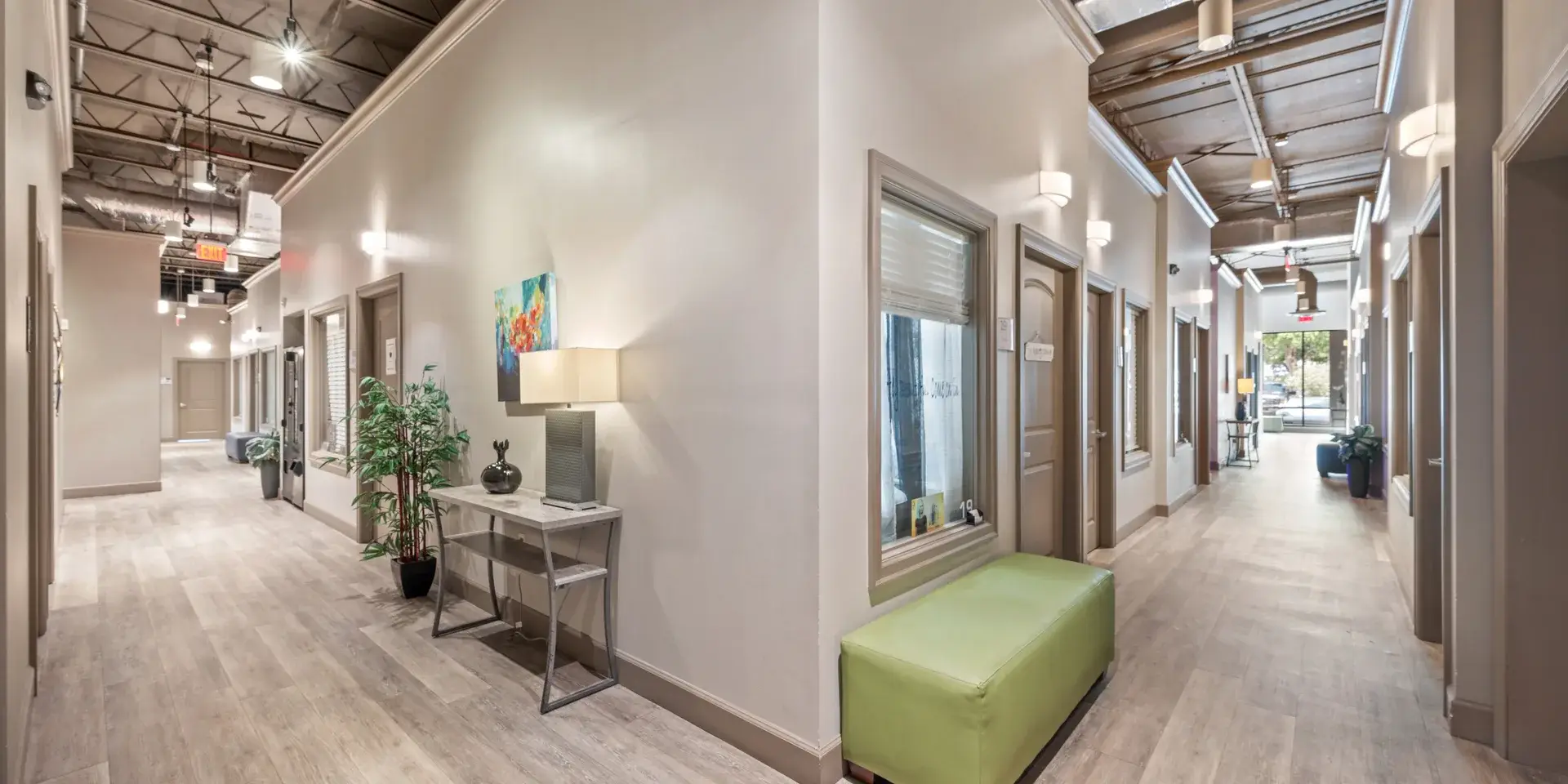
The salon suite model is the fastest-growing segment of beauty franchising. Franchisees lease commercial retail space, build out 30 to 50 private suites, and rent those suites to independent beauty professionals on a weekly basis.
How it makes money: Revenue comes from weekly suite rentals, typically averaging $250 to $350 per suite depending on the market and brand. A 40-suite location at $300 per week generates $12,000 in weekly gross income, or approximately $624,000 annually at full occupancy.
Why it works: The salon suite model benefits from a powerful industry trend. Beauty professionals are leaving commission-based salon employment in growing numbers, choosing instead to operate independently in private suites where they keep 100% of their service revenue. This creates consistent demand for well-located, professionally managed suite facilities.
Profitability drivers:
- Occupancy rate: The single most important variable. Premium brands with strong tenant retention maintain 85-95% occupancy at maturity.
- Average rental rate: A+ locations in affluent markets command higher weekly rents.
- Tenant retention: Lower turnover means fewer vacancy periods and reduced marketing costs to fill empty suites.
- Operating efficiency: The salon suite model requires relatively few employees compared to service-based salons.
At Salons by JC, franchised locations averaged $534,950 in gross sales in 2024, with a 92% tenant renewal rate. The brand’s Concierge Manager system provides full-time onsite management at every location, making it the only salon suite franchise that operates as a true semi-absentee investment. Other brands (Sola Salons, Phenix Salon Suites) require 15-20 hours of weekly owner involvement.
The total investment for a salon suite franchise ranges from $700,000 to over $2 million depending on the brand, location, and build-out scope. Salons by JC’s investment range of $1,331,200 to $2,043,400 reflects the premium build quality and built-in management infrastructure. The franchise fee structure typically includes the initial license, training, and territory protection.
Best for: High-net-worth investors seeking real estate-based passive income in the beauty sector. Particularly suited to corporate executives, existing business owners, and portfolio investors who want recurring rental revenue without daily operational involvement.
See how the Salons by JC salon suite model delivers semi-absentee ownership.
2. Traditional Salon Franchise: Full-Service Hair Care
Traditional salon franchises are the most recognizable model in the beauty industry. Brands like Great Clips, Sport Clips, and Supercuts operate thousands of locations with employed stylists providing haircuts, coloring, and styling services to walk-in and appointment-based customers.
How it makes money: Revenue comes directly from customer service appointments. Average ticket prices range from $15 for basic haircuts to $100+ for color and treatment services. High-volume locations process dozens of customers per day.
Profitability drivers:
- Customer volume: Traditional salons depend on high foot traffic and repeat visits. Location visibility and walk-in accessibility directly impact revenue.
- Stylist productivity: Revenue per stylist per hour determines profitability. Staff scheduling, training, and retention are constant management priorities.
- Price point: Budget salons compete on volume; premium salons compete on service quality and average ticket price.
- Product sales: Retail products (shampoo, conditioner, treatments) add 5-15% to overall revenue.
Challenges: The biggest operational challenge is staffing. Licensed stylists are in high demand, and turnover in the traditional salon sector runs 40-60% annually. Franchisees spend significant time recruiting, training, and managing employees. Labor costs typically represent 40-50% of revenue.
Total investment for a traditional salon franchise ranges from $200,000 to $500,000. Owner involvement is typically full-time or 30+ hours per week, especially during the first two years. Multi-unit owners can eventually hire managers, but the model requires active oversight of employee performance and customer experience.
Best for: Investors who want a lower entry point, enjoy hands-on management, and are comfortable with the complexities of employee-based business models. Strong local marketing skills are an advantage.
3. Blow Dry Bar Franchise: Specialty Styling Services
Blow dry bars focus on a narrow service offering: professional blowouts, styling, and special-occasion hair services. Brands like Drybar popularized this model by creating a premium experience around a single service category.
How it makes money: Revenue comes from blowout appointments, typically priced between $40 and $65 per service. Add-on services (braids, updos, treatments) and retail product sales increase the average ticket. Most blow dry bars serve 30-60 clients per day in a well-located store.
Profitability drivers:
- Average ticket price: Higher-priced services in affluent markets improve margins.
- Customer frequency: Blow dry bars depend on repeat customers who visit weekly or biweekly. Membership programs lock in recurring revenue.
- Location quality: Blow dry bars perform best in upscale shopping areas, near offices, and in neighborhoods with a high concentration of professional women.
- Staff efficiency: Unlike full-service salons, blow dry bars train stylists in a narrow skill set, which reduces training time and improves consistency.
Challenges: The blow dry bar model faces geographic limitations. It performs well in urban and affluent suburban markets but struggles in areas without sufficient population density and disposable income. The narrow service offering also limits revenue ceiling compared to full-service models.
Total investment ranges from $250,000 to $600,000 depending on the brand, location, and build-out. Owner involvement is typically full-time, with 30+ hours per week needed for staff management, marketing, and customer experience oversight.
Best for: Operators who want to build a brand around a premium, niche service experience in the right market. Requires strong operational skills and hands-on management.
How Do These Models Compare on Profitability?
Direct profitability comparisons between franchise models are difficult because FDD data varies in format and reporting. However, the structural differences between rental-based and service-based models create distinct financial profiles.
| Factor | Rental-Based (Salon Suites) | Service-Based (Traditional/Blow Dry) |
|---|---|---|
| Revenue predictability | High (weekly recurring rent) | Variable (depends on appointment volume) |
| Labor costs | Low (1-2 employees per location) | High (40-50% of revenue) |
| Staffing complexity | Minimal | Major operational challenge |
| Revenue ceiling | Capped by suite count and rental rates | Scales with customer volume |
| Gross margin | Higher (fewer variable costs) | Lower (labor and product costs) |
| Ramp-up period | 6-12 months to stable occupancy | 3-6 months to steady traffic |
Salon suite franchises generally offer higher gross margins because the rental model keeps labor costs low. One or two employees (such as a concierge or property manager) can operate a 40-suite location, while a traditional salon of comparable revenue needs 10-15 stylists plus front desk staff.
Service-based models can achieve faster initial revenue because customers start visiting immediately after opening. Salon suites need to fill suites one at a time, which creates a longer ramp-up period. However, once a salon suite location reaches 85-95% occupancy, the revenue is more stable and predictable than service-based models that fluctuate with seasonal customer demand.
For investors focused on franchise ROI calculations, the total return depends not just on gross revenue but on net income after labor, occupancy costs, and management overhead. Models that require less owner time produce higher returns per hour of the investor’s involvement.
Download the Salons by JC financial guide for detailed investment and revenue data.
4. Beauty Services Franchise: Nails, Lashes, and Brows
Specialty beauty franchises focus on specific service categories: nail salons, lash studios, brow bars, or med spas. Brands like MiniLuxe (nails), Amazing Lash Studio (lashes), and European Wax Center (waxing) operate in focused niches within the broader beauty industry.
How it makes money: Revenue comes from service appointments, typically priced between $25 (basic nails) and $200+ (lash extensions, facial treatments). Many brands emphasize membership models that generate recurring monthly revenue from regular clients.
Profitability drivers:
- Membership revenue: Monthly membership fees create predictable cash flow regardless of appointment volume.
- Service pricing: Specialized services often command higher margins than general haircuts because clients perceive them as expert-level work.
- Repeat frequency: Lash fills, nail maintenance, and waxing require regular appointments every 2-4 weeks, building a loyal customer base.
- Lower build-out costs: Specialty beauty spaces are typically smaller than full-service salons, reducing construction and lease expenses.
Challenges: Like traditional salons, specialty beauty franchises face staffing issues. Licensed estheticians, nail technicians, and lash artists require specialized training. Employee turnover disrupts service quality and customer relationships. Many of these models also face growing competition as the specialty beauty space has become crowded in major markets.
Total investment typically ranges from $150,000 to $400,000 depending on the brand and service type. Owner involvement is usually full-time (25+ hours per week), especially during the first year when building a client base and managing staff training.
Best for: Operators who are passionate about a specific beauty niche and want a lower investment entry point with hands-on involvement in client experience and staff development.
5. Mobile or Booth Rental Franchise: Flexible Workspace Models
Booth rental and mobile salon models offer the lowest barrier to entry in beauty franchising. In the booth rental model, the franchisee leases individual stations or chairs within a shared salon space. Mobile models bring services directly to clients at homes, offices, or events.
How it makes money: Booth rental franchises collect weekly or monthly rent from individual stylists who work independently. Mobile models charge per-service fees to clients. Revenue per location is lower than salon suites because booth rental spaces are smaller and less infrastructure-intensive.
Profitability drivers:
- Low overhead: Smaller spaces, less build-out cost, and minimal staff keep operating expenses low.
- Flexible scaling: Franchisees can start with a single location and expand gradually without the large capital commitments of salon suites or traditional salons.
- Low capital requirements: Total investment often falls below $200,000, making this accessible to first-time franchise investors.
Challenges: The lower investment comes with a lower revenue ceiling. Booth rental locations generate less income per square foot than salon suites with private rooms. The model also offers less tenant privacy, which is a growing priority for beauty professionals who prefer the salon suite model. Mobile models face logistical challenges with scheduling, travel time, and equipment transport.
Total investment ranges from $50,000 to $200,000. Owner involvement varies from 10-20 hours per week, depending on whether the franchisee manages the space actively or hires part-time help.
Best for: First-time investors testing the beauty franchise space with limited capital, or operators who want a flexible, low-risk entry point before scaling to a larger model like salon suites.
Which Beauty Salon Franchise Model Is Most Profitable?
No single model is the “most profitable” for every investor. Profitability depends on how much capital you deploy, how much time you invest, and which market conditions you operate in.
For high-net-worth investors seeking the best return on time, the salon suite model stands out. The combination of recurring rental income, low labor costs, and high gross margins creates a favorable financial profile. When paired with a brand like Salons by JC that includes professional management through the Concierge Manager, the salon suite model becomes a true portfolio investment rather than a second job.
For investors with less capital, traditional salon and specialty beauty franchises offer lower entry points. However, these models require significantly more personal time and carry higher staffing risk.
The right question is not “which model makes the most money?” but “which model makes the most money per hour of my time, given my available capital?” When you frame it that way, the salon suite business model with semi-absentee ownership consistently delivers the strongest answer for qualified investors.
Frequently Asked Questions
Is a beauty salon franchise a good investment?
Beauty salon franchises can be strong investments, particularly in the salon suite segment where recurring rental income and low labor costs create favorable margins. The beauty industry has historically shown recession resistance, and the trend toward independent beauty professionals creates steady demand for suite-based models. Returns depend on the brand, location, and franchise model you choose.
How much does it cost to start a beauty salon franchise?
Investment ranges from $50,000 for booth rental models to over $2 million for premium salon suite franchises. Traditional salon franchises typically fall between $200,000 and $500,000. Salon suite franchises range from $700,000 to $2 million+. Read our franchise fees guide for a detailed cost breakdown.
Do I need beauty industry experience to own a salon franchise?
Not for rental-based models like salon suites. Salons by JC does not require prior beauty or salon experience because franchisees are investors, not stylists. The franchise provides complete training and the Concierge Manager handles daily operations. Service-based models (traditional salons, blow dry bars) benefit from industry knowledge but typically do not require licensure for the owner.
What is the difference between a salon suite franchise and a traditional salon franchise?
A salon suite franchise rents private workspaces to independent beauty professionals who run their own businesses. A traditional salon franchise employs stylists and generates revenue from customer appointments. The salon suite model has lower labor costs and more predictable revenue. The traditional model has a lower initial investment but requires more active management. See our full salon suite vs traditional salon comparison.
Which salon franchise has the highest owner satisfaction?
Owner satisfaction correlates strongly with the time required to manage the business. Brands with built-in management systems, like Salons by JC’s Concierge Manager model, report high franchisee satisfaction because owners maintain lifestyle flexibility. Check each brand’s FDD for franchisee contact lists and ask current owners directly about their experience. Learn about the path to franchise ownership.