Author
Eliana RodriguezPublished
Aug th, 2026Category
GuidesOwning a salon business does not necessarily mean standing behind a chair, managing every appointment, or building revenue through stylist commissions. A salon suite complex can operate as a commercial property and service business, with private studios leased to independent beauty professionals.
The salon suite franchise model lets an owner rent individual studios to independent stylists and beauty professionals while a hired Concierge Manager oversees daily operations. Including recruitment, leasing, and facility maintenance. That structure can support semi-absentee ownership without requiring the franchisee to be a stylist.
The opportunity is not about declaring one salon format universally better than another. It is about understanding how rental-based revenue, operational responsibilities, and owner involvement differ. First, it helps to define what the model includes and how the pieces work together.
Request franchise information to explore whether the salon suite franchise model fits your ownership goals.
What Is the Salon Suite Franchise Model?
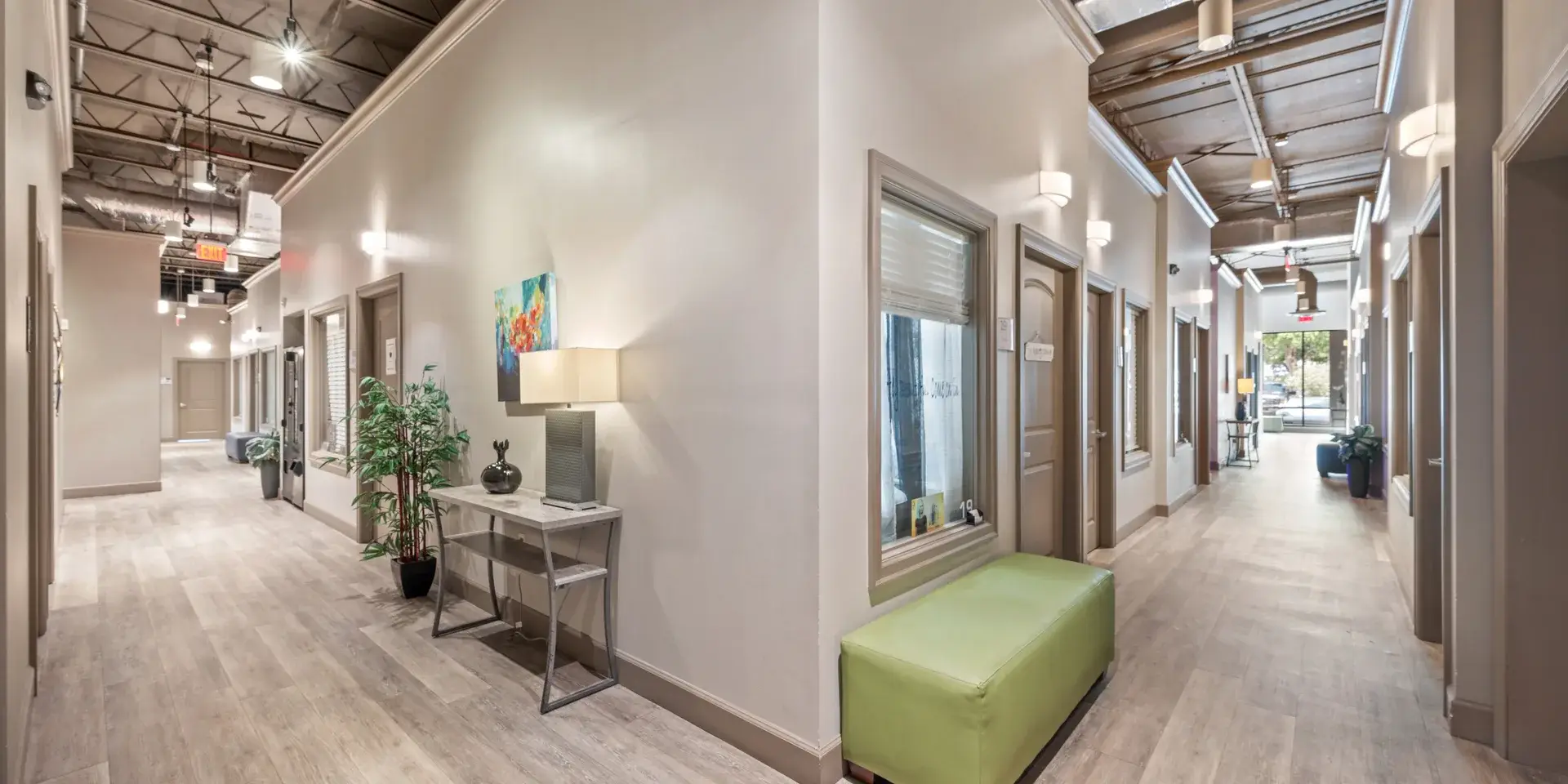
The salon suite franchise model gives an owner a commercial salon complex with individual private studios that are leased to independent beauty and wellness professionals. Instead of building a business around employing stylists and collecting a percentage of each service, the franchise owner operates the property and its studio-rental system. At Salons by JC, this turnkey approach supports more than 160 locations across 26 states.
Each studio is designed as a professional workspace for a stylist, barber, esthetician, nail professional, or another qualified beauty and wellness provider. The professional runs their own client relationships, services, schedule, and business activity. The franchise owner provides the environment that makes those businesses possible, including the facility, private suites, shared amenities, and operating standards.
How the ownership structure works
The basic relationship is straightforward:
- The franchisee owns and operates the salon suite complex.
- Independent professionals lease individual studios under the location’s rental terms.
- Each professional manages their own service business from a private, branded workspace.
- The location team supports leasing, facility operations, and the experience for both professionals and guests.
This structure separates two roles that are often combined in a traditional salon. The stylist focuses on serving clients and growing their practice. The franchise owner focuses on the business of the complex, including occupancy, operations, customer experience, and long-term performance. That distinction is central to the salon suite business model.
A business model for owners who are not stylists
You do not need to cut hair, provide beauty services, or have a cosmetology license to pursue this type of ownership. The model is built for entrepreneurs who want to own a beauty-focused business without being the service provider. It can also appeal to investors and professionals seeking a semi-absentee structure, although semi-absentee ownership still requires active oversight, sound decisions, and attention to the location’s performance.
Salons by JC uses a Concierge Manager model to support that operating structure. The franchise hires and trains a general manager to oversee daily responsibilities such as stylist recruitment, studio leasing, and facility maintenance. The owner can then concentrate on strategic direction, financial management, and the broader health of the business rather than being behind the chair every day.
The broader beauty industry has also seen growth among non-employer establishments, which include independent professionals who lease space. One industry snapshot reported that non-employer salon and spa establishments increased 36 percent over a decade while their sales increased 63 percent. That trend helps explain why studio-based models continue to attract entrepreneurs who value independence and why franchising is increasingly used to expand established beauty concepts. It does not guarantee results for any individual location, but it illustrates the market structure the model is designed to serve.
How Studio Rental Income Works in a Salon Suite Franchise
A salon suite franchise earns revenue through a rent-roll structure. The franchisee owns and operates the salon complex, then leases individual private studios to independent stylists and other beauty professionals. Instead of relying primarily on commissions from services performed by employees, the business collects contracted rent from professionals who operate their own practices inside the property.
That distinction changes how the owner evaluates revenue. In a commission-based salon, income can rise or fall with employee schedules, chair occupancy, service volume, retail sales, and the mix of services performed. In a suite model, the central revenue question is how many studios are leased, at what rental rate, and how consistently tenants remain in place. Lease terms and payment schedules create a more visible revenue base for planning, although occupancy, expenses, tenant turnover, and local market conditions still affect actual results.
Salons by JC describes its turnkey model as one in which franchisees rent high-end, private studios to independent beauty and wellness professionals. Those professionals serve their own clients and manage their own service businesses, while the franchisee focuses on the operation and performance of the salon complex. Learn more about the salon suite business model and how the pieces fit together.
Why occupancy is the key revenue driver
In a rental business, an empty studio generally produces no rent while still contributing to the property’s fixed costs. Occupancy therefore becomes a central operating priority. The owner and on-site team must attract qualified professionals, provide a well-maintained environment, support a positive tenant experience, and respond quickly when a studio becomes available. Location quality, visibility, accessibility, studio design, amenities, and the local supply of independent beauty professionals can all influence leasing demand.
The broader industry trend supports the importance of this audience. A salon-industry economic snapshot reported that non-employer salon and spa establishments, which include independent professionals who lease space. Increased by 36% over the prior decade while their sales increased by 63%. Review the salon industry economic snapshot for the underlying figures and methodology. This trend does not guarantee occupancy at any individual location, but it helps explain why private studio space can appeal to professionals seeking more control over their businesses.
Predictability without a guarantee
Fixed studio leases can make revenue easier to forecast than income that depends on daily service commissions. A franchisee can build projections around the number of available studios, expected rental rates, lease-up timing, operating expenses, and realistic renewal assumptions. The Concierge Manager supports this process by helping oversee stylist recruitment, studio leasing, and facility maintenance. Allowing the owner to focus on strategic direction rather than working behind the chair.
Predictable contracted rental income is a business-model advantage, not a promise of guaranteed income. Before investing, prospective franchisees should assess the local market, expected occupancy, lease economics, financing, operating costs, and the support available for filling and retaining studios.
Salon Suite Franchise vs. Traditional Salon: Key Differences
Both models can support a strong salon business, but they are built around different operating and revenue structures. A salon suite franchise model centers on leasing private studios to independent beauty professionals. A traditional salon generally employs stylists and earns revenue from the services delivered under one brand. Neither approach is automatically right for every owner. The better fit depends on how you want to earn income, manage people, and participate in daily operations.
| Business consideration | Salon suite franchise | Traditional salon |
|---|---|---|
| How the owner earns | Revenue is organized around a fixed studio rent roll. Independent professionals lease private spaces and manage their own service businesses. | Revenue is typically tied to services performed in the salon, with the owner earning through a variable commission or service-revenue structure. |
| Staffing structure | Independent leasing professionals operate their own studios. The owner focuses on the facility, leasing activity, and business systems. | Stylists are employed or engaged by the salon, so the owner or leadership team recruits, schedules, trains, and supports a service team. |
| Day-to-day involvement | A hired Concierge Manager can oversee stylist recruitment, studio leasing, and facility maintenance, supporting a semi-absentee ownership approach. | The owner may be more involved in managing the team, coordinating the salon floor, maintaining service standards, and handling daily staffing needs. |
| Income predictability | Contracted rental income can make the revenue model easier to plan than one based entirely on fluctuating service volume. Actual performance still depends on factors such as leasing, expenses, and market demand. | Revenue can rise or fall with appointments, stylist productivity, service mix, seasonality, and other operating conditions. |
| Expansion potential | The model is designed for owners who want a scalable, semi-absentee business centered on repeat studio leasing and facility operations. | Growth may involve adding service capacity, recruiting more stylists, expanding the team, or opening additional locations with corresponding management responsibilities. |
| Financial accessibility | Industry comparisons commonly identify lower startup costs and greater financial accessibility as potential advantages of salon suite franchises, although each opportunity requires its own due diligence. | Startup needs vary widely by location, lease terms, build-out, equipment, payroll, and the size of the service operation. |
The distinction is ultimately about the role you want to play. In the suite model, you own and develop the business environment while independent professionals serve their own clients. In a traditional salon, the owner is more directly connected to the team and the service revenue generated on the floor. Salons by JC describes this positioning as becoming a business owner, not just a service provider. Explore the semi-absentee salon franchise model to see how the Concierge Manager structure supports that approach.
Review projected costs, local demand, leasing assumptions, staffing requirements, and operational support before choosing a model. A clear comparison helps you evaluate the opportunity against your capital, experience, and preferred level of involvement.
Sources: industry discussion of salon suite startup costs and financial accessibility; Salons by JC customer materials on its turnkey studio-leasing structure and business-owner model.
Why You Do Not Need to Cut Hair or Manage a Salon
A common concern for prospective franchise owners is simple: “I do not know how to cut hair. And I have never managed a salon.” That experience is not a requirement for this ownership model. Salons by JC is structured so you can operate the business behind the salon suites without performing the services inside them.
As the franchise owner, your role centers on the salon complex, its real estate, and the leasing of private studios. Independent beauty and wellness professionals operate their own businesses from those studios. They manage their client relationships and deliver their own services, while you provide the professional environment and business infrastructure that supports their work. In other words, you can be a business owner, not a service provider.
What the owner is responsible for
The salon suite franchise model separates property and facility operations from the work performed by individual stylists. Your business is to oversee the complex and its leasing strategy, maintain the larger business direction, and make decisions that support a well-run location. You are not expected to stand behind a chair, build a personal book of clients, or supervise every haircut and service.
This structure also gives beauty professionals room to operate independently. Stylists can focus on serving their clients and building their own businesses from private studios. That independence is a central part of the model, not a gap the franchise owner must fill.
How the Concierge Manager supports semi-absentee ownership
Day-to-day execution is supported by a hired and trained general manager known as the Concierge Manager. This role is broader than handling appointments or bookings. The Concierge Manager oversees important operating responsibilities, including stylist recruitment, studio leasing, and facility maintenance.
That support allows the owner to remain involved at the strategic level while a trained operator handles daily activity at the location. You still retain responsibility for ownership decisions and business performance, but you do not have to personally manage every operational detail. The arrangement is designed for semi-absentee ownership, rather than requiring the owner to be present behind the chair or on-site every day.
To see how the responsibilities fit together, review the semi-absentee salon franchise model. The right question is not whether you can perform salon services. It is whether you are prepared to lead a service-based real estate and leasing business with the support of a trained operating manager.
How the Semi-Absentee Salon Suite Franchise Model Works in Practice
A semi-absentee owner is responsible for the performance and direction of the salon suite complex, not for delivering hair, skincare, or other beauty services. The operating structure separates ownership from service delivery. Independent professionals run their own businesses from private studios, while the franchise team supports the environment that helps those studios operate effectively.
-
Own and develop the suite complex
The process begins with ownership of the salon suite location. As the franchise owner, you are responsible for the broader business, including the site, the customer experience, the facility, and the financial performance of the complex. You do not need to work behind the chair or build a personal book of salon clients. Your focus is the asset and operating system that supports multiple independent beauty and wellness professionals.
-
Lease private studios to independent professionals
Instead of employing a team of stylists and paying commissions on each service, the complex provides individual, high-end private studios that beauty professionals lease for their own practices. Each professional serves their clients independently and manages the services they provide. The franchise model therefore centers on filling and retaining studio tenants, creating a clear relationship between available space, occupancy, and the location’s revenue potential.
-
Have the Concierge Manager run daily operations
The owner hires and trains a Concierge Manager to oversee the day-to-day operation of the location. This role is broader than handling bookings. The Concierge Manager supports stylist recruitment, manages the studio leasing process, and oversees facility maintenance. That operational responsibility gives independent professionals a point of contact at the complex while giving the owner a trained leader to manage routine execution.
-
Oversee strategy, occupancy, and profitability
With daily operations delegated, the owner’s work shifts to leadership and oversight. That can include reviewing occupancy, tracking leasing activity, monitoring expenses, evaluating local marketing, and setting priorities for growth and retention. You remain accountable for decisions that affect the business, but you are not required to personally perform client services or supervise every interaction on site.
This structure is the practical distinction between owning a salon suite business and becoming a service provider yourself. The semi-absentee salon franchise model gives the owner a defined operating role: build a strong location, support the Concierge Manager, and use business information to guide decisions.
Is a Salon Suite Franchise Model a Good Investment?
A salon suite franchise model can be a compelling investment for an entrepreneur who wants to own a real estate-based, service-focused business without providing beauty services personally. The basic logic is straightforward: the franchise owner operates a salon complex, leases private studios to independent beauty and wellness professionals, and builds revenue through recurring rental agreements.
That structure can make income more predictable than a commission model because the business is organized around studio leases rather than the daily service volume produced by employees. It is not, however, a guarantee of profitability. Results depend on the location, local demand, financing terms, operating expenses, lease rates, and the percentage of studios occupied over time.
Occupancy is the central value driver
In a rental-based business, occupancy deserves close attention. A well-positioned property with strong demand from independent professionals can support a dependable rent roll, while excessive vacancy can place pressure on cash flow and debt service. Before investing, evaluate the market’s population, traffic patterns, nearby competitors, professional talent pool, and the time and cost required to fill studios.
The broader industry also supports the demand case. A salon-industry economic snapshot reported that non-employer salon and spa establishments, which include independent professionals who lease space, grew 36% over the prior decade, while sales increased 63%: industry economic snapshot. That trend does not predict the performance of any individual location, but it helps explain why flexible, independent workspaces remain relevant.
Accessibility and diversification matter
Compared with some traditional salon structures, salon suite franchises are often positioned as having lower startup costs and greater financial accessibility. The exact capital required still depends on the franchise, market, property, build-out, and financing plan. For Salons by JC, prospective owners should review the current investment figures and obligations in the Franchise Disclosure Document rather than rely on a general industry comparison.
The model can also support a broader professional ecosystem. Independent stylists and beauty professionals may add retail, specialized services, education, or other revenue streams beyond their core appointments. Making the studio environment valuable to them as well as to the property owner. In the owner role, a Concierge Manager can oversee stylist recruitment, studio leasing, and facility maintenance, allowing the franchisee to focus on strategic decisions instead of working behind the chair.
Salons by JC’s scale, with more than 160 locations across 26 states, provides an established framework to investigate as you assess scalability and brand support. Scale is not a substitute for local due diligence, but it can offer credibility and operating resources that a first-time owner may value.
Ultimately, the right question is not whether every salon suite franchise will produce a particular return. It is whether the location, occupancy plan, financing, and operating model create a risk profile that fits your goals. Read the Franchise Disclosure Document carefully, ask the franchise team detailed questions about leasing and support, and compare the opportunity with your alternatives. For a deeper review of the decision factors, read are salon suites a good investment.
Ready to explore the salon suite franchise model for yourself? Request franchise information to start the conversation.
Frequently Asked Questions
What is the salon suite franchise model?
The salon suite franchise model lets an owner operate a salon complex with private studios leased to independent beauty and wellness professionals. The franchisee manages the property and rental structure, while each professional runs their own client services and business.
How does a salon suite franchise make money?
Revenue primarily comes from recurring rent paid by independent professionals for their studios. The result differs from a commission-based salon because the owner’s core business is leasing space. With performance influenced by factors such as location, studio demand, occupancy, operating costs, and retention.
Do I need to be a stylist to own one?
No. You do not need to cut hair or provide beauty services. The model is designed for an entrepreneur who wants to own and oversee the business, while independent professionals deliver services in their individual studios.
What does the Concierge Manager do?
A Concierge Manager is the hired general manager who oversees daily operations. Responsibilities can include recruiting stylists, leasing studios, coordinating facility maintenance, and supporting the on-site experience, allowing the owner to focus on strategy rather than being behind the chair.
How is this different from operating a traditional salon?
A traditional salon commonly coordinates service providers through an employer or commission structure. A salon suite model gives independent professionals private spaces and separates their service businesses from the franchise owner’s rental operation. Neither model is automatically right for every investor, so compare staffing, revenue, costs, and desired involvement before deciding.
Ready to Explore the Salon Suite Franchise Model?
If you want to understand how studio leasing and the Concierge Manager approach can fit your ownership goals, the next step is a focused conversation. Request franchise information to learn how the salon suite franchise model works, what ownership involves, and how the Concierge Manager supports daily operations. This can help you evaluate the opportunity against your experience, resources, and preferred level of involvement.