
Author
Eliana RodriguezPublished
Jun th, 2026Category
GuidesA semi-absentee salon suite business is not a passive investment. It is an operating structure that assigns daily execution, strategic oversight, system support, and specialized work to different people. Understanding those boundaries helps a prospective owner evaluate the real commitment before investing.
Request franchise information to discuss the Salons by JC operating structure.
The salon suite franchise staffing model typically puts strategic decisions and accountability with the owner, daily location support with a Concierge Manager, system guidance with the franchisor, and specialized services with outside vendors. This lean structure can support semi-absentee ownership, but the owner still leads the business and remains responsible for results.
Unlike a traditional salon, a salon suite location does not employ a large team of beauty professionals to serve clients. Independent beauty and wellness professionals operate their own businesses from private suites. The franchise owner’s staffing decisions therefore center on location operations, suite occupancy, tenant experience, financial controls, and property standards.
How the salon suite franchise staffing model works
A salon suite franchise staffing model separates ownership from day-to-day location coordination without separating the owner from accountability. The Concierge Manager keeps the location running smoothly, the franchisor supplies training and systems, and vendors complete defined technical work. The owner directs priorities, reviews performance, and makes final local decisions.
This division of labor is what makes semi-absentee ownership possible. It gives the owner a way to manage through people, processes, and performance measures rather than being physically present for every routine task. However, the structure only works when every role has written responsibilities, clear authority, and a dependable reporting rhythm.
The owner begins by setting expectations for occupancy, tenant service, facility quality, marketing, and financial performance. The Concierge Manager then translates those expectations into daily action. The franchisor’s support team provides the operating framework and coaching. Outside vendors handle work that requires special skills, tools, licenses, or insurance.
A lean team built around suite rental operations
Traditional salon staffing often revolves around scheduling service providers, selling products, and managing client appointments. A salon suite location has a different focus. The beauty professionals renting suites manage their own client services and businesses. The local operating team instead concentrates on supporting the property and the suite-member community.
That distinction reduces the need for a large onsite employee roster, but it does not eliminate management. Someone still needs to monitor the condition of shared areas, respond to tenant questions, coordinate maintenance, support leasing activity, and communicate issues to the owner. At Salons by JC, the Concierge Manager is central to that work.
What responsibilities stay with the franchise owner?
The franchise owner remains the leader of the local business. Core responsibilities include hiring and managing the Concierge Manager, approving budgets, monitoring occupancy and financial results, directing local marketing, maintaining standards, overseeing vendors, and making major decisions. Semi-absentee ownership changes how those duties are performed, not who is accountable for them.
An owner may not need to open the doors each morning, but the owner still sets the direction. Strong operators define measurable expectations and create a regular cadence for reviewing them. They know which decisions the Concierge Manager can make independently, which require consultation, and which remain owner-only decisions.
Hire, coach, and retain the Concierge Manager
The owner’s most important staffing decision is often selecting the right Concierge Manager. The role requires organization, professional communication, sound judgment, and the ability to build trusted relationships with independent beauty professionals. Once hired, the manager needs clear goals, useful training, regular feedback, and access to the owner when an issue exceeds their authority.
Delegation does not mean disappearing. The owner should hold consistent one-on-one meetings, review open issues, coach the manager through difficult situations, and recognize strong performance. A capable manager can improve daily consistency, but the owner creates the conditions that allow that manager to succeed.
Own the financial and occupancy decisions
The owner reviews the budget, cash flow, occupancy, rent collection, expenses, marketing performance, and vendor costs. The Concierge Manager may collect information or complete approved tasks, but decisions that materially affect the business should remain with the owner. Examples include approving major repairs, changing local spending, selecting vendors, and deciding how to respond to persistent occupancy gaps.
Owners should use a short dashboard rather than waiting for problems to become obvious. Weekly or monthly reviews can include occupied suites, upcoming vacancies, prospect activity, overdue balances, unresolved maintenance items, marketing leads, and budget variances. These measures help the owner identify where attention is needed.
Lead local strategy and compliance
The franchisee is responsible for operating the local business in accordance with franchise agreements and applicable requirements. Legal, employment, tax, safety, and licensing questions should be reviewed with qualified professionals. The franchisor can provide system guidance, but that support does not replace an owner’s local obligations or professional advisors.
Review the Salons by JC model and how it supports local ownership.
The Concierge Manager’s role in daily operations
The Concierge Manager is the onsite operational link between the franchise owner and the suite-member community. The manager supports daily location standards, communicates with beauty professionals, assists with leasing activity, coordinates routine needs, and escalates decisions to the owner. The role creates consistency without replacing the owner’s leadership.

Because the Concierge Manager is present at the location, this person often sees emerging issues first. A small facility concern, a tenant question, or a leasing opportunity can be addressed promptly before it grows. The manager also provides the owner with local context that a dashboard alone cannot show.
Support the suite-member experience
Independent beauty and wellness professionals value a professional environment where they can focus on their clients and businesses. The Concierge Manager helps maintain that environment by communicating clearly, responding to reasonable location needs, and fostering a welcoming community. The role is supportive rather than supervisory over the professionals’ independent businesses.
Retention matters in a suite rental model. A manager who understands tenant concerns, follows through on commitments, and keeps the owner informed can help strengthen the overall experience. When a request requires owner approval or a specialized vendor, the manager should explain the next step and track it through completion.
Coordinate leasing and location presentation
The manager may assist with tours, prospect follow-up, suite readiness, and local marketing execution according to the owner’s plan. An appealing location and responsive process can help prospective suite members evaluate the opportunity. The owner should define approved messaging, offers, and decision authority so leasing activity remains consistent.
Manage routine issues and escalate exceptions
A useful role description distinguishes routine work from exceptions. The Concierge Manager may coordinate an approved cleaning schedule or submit a repair request. A large expense, contract change, sensitive dispute, or safety concern should be escalated immediately. Clear escalation rules protect both the manager and the owner from avoidable confusion.
How franchisor support strengthens the operating structure
The franchisor support team gives franchisees a repeatable operating framework rather than taking over the local business. Salons by JC provides training, opening support, operating guidance, technology resources, marketing assistance, and ongoing coaching. Franchisees use those resources while retaining responsibility for their own location, staff, vendors, and performance.
A franchise system can reduce the amount of operating design an owner must create from scratch. Prospective owners should still study the Franchise Disclosure Document, speak with existing franchisees, and understand exactly what support is included. Support is most valuable when the owner and manager actively use it.
Training before and after opening
Salons by JC describes training and support that cover business operations, suite rental management, marketing, financial management, and Concierge Manager responsibilities. Pre-opening assistance can also help the owner prepare for site development, launch activity, and manager readiness. These resources create a common operating language for the owner and manager.
Ongoing education and coaching can help owners compare results, troubleshoot challenges, and plan improvements. A business coach can provide perspective from across the franchise system, while the owner decides how to apply guidance within the local market.
Systems, marketing, and operating guidance
Technology and documented processes make remote oversight more practical. The owner needs reliable information about occupancy, prospects, collections, expenses, and open tasks. Standard systems also make it easier to train a new manager, compare locations, and notice when a process is drifting.
Marketing support can provide campaigns, materials, and brand direction. Local execution still matters. The owner and Concierge Manager should agree on who handles inquiries, schedules tours, follows up with prospects, and reports outcomes.
Explore the training and franchisee support available from Salons by JC.
Where outside vendors fit into the staffing model
Outside vendors extend the local team for specialized or periodic work such as cleaning, repairs, professional services, and approved marketing support. Vendors can keep the employee team lean, but they still require selection, contracts, scheduling, quality checks, and payment controls. The owner remains responsible for choosing and overseeing them.
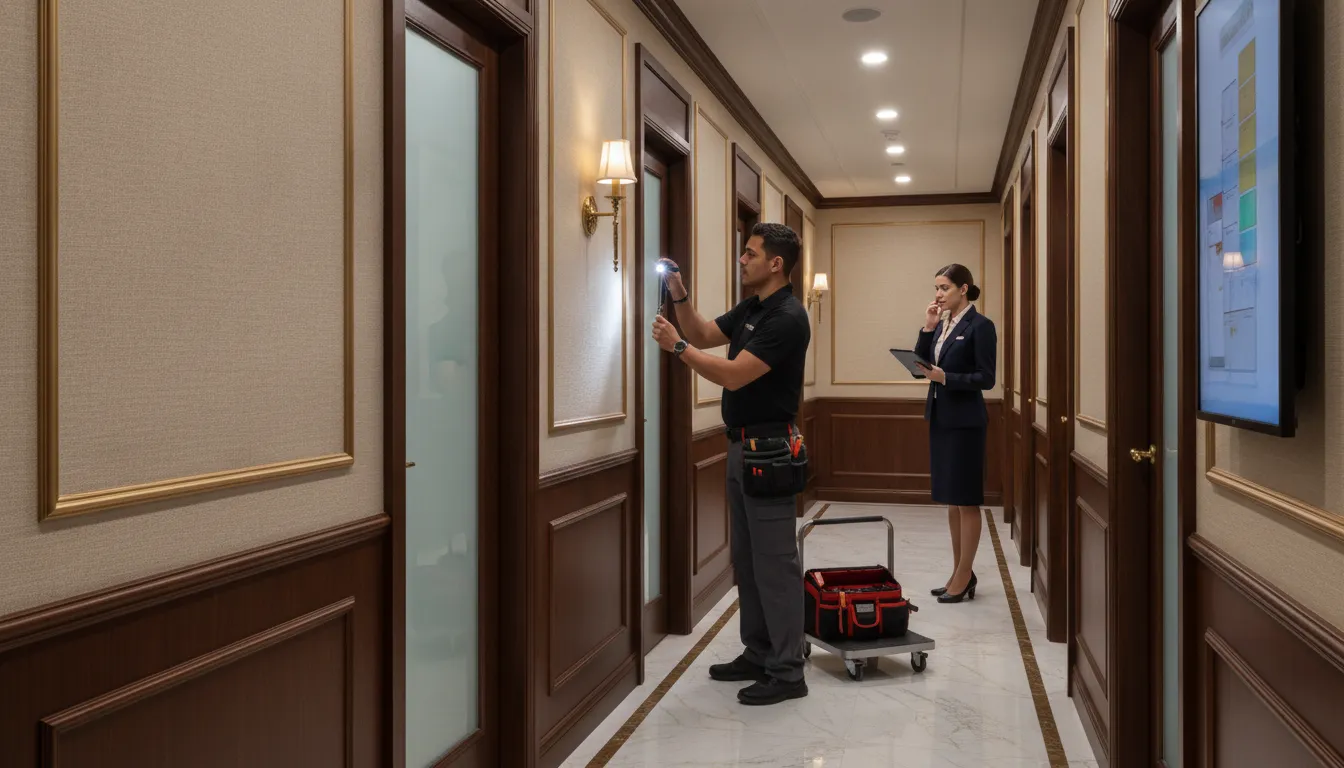
Vendors are most effective when their scope is specific. Each agreement should state the work, schedule, service standards, price, approval process, and point of contact. The Concierge Manager may coordinate access and confirm completion, while the owner approves the relationship and monitors cost and performance.
Facility and maintenance vendors
Cleaning, plumbing, electrical, HVAC, security, landscaping, and other property needs may be handled by qualified outside providers. The manager can document issues and coordinate routine visits. The owner should approve major work and confirm that vendors meet applicable insurance, licensing, and contract requirements with advice from qualified professionals.
Professional and marketing advisors
Owners may also use accountants, attorneys, payroll providers, insurance professionals, and local marketing specialists. These providers bring expertise that does not need to sit onsite. They advise or execute within their scope, while the owner retains decision-making authority.
Controls for vendor accountability
A semi-absentee owner needs visibility into vendor activity. Simple controls include approved vendor lists, written estimates, spending limits, invoice review, and completion photos for appropriate work. The manager should never have to guess whether an urgent issue can be authorized. Predefined emergency procedures help the team act quickly while preserving oversight.
Salon suite franchise roles at a glance
Each role supports a different layer of the operation. The owner leads and approves, the Concierge Manager coordinates onsite execution, the franchisor provides systems and coaching, and outside vendors deliver specialized services. Performance suffers when those boundaries overlap without clear authority or when important work has no named owner.
| Role | Primary focus | Typical responsibilities | Accountability |
|---|---|---|---|
| Franchise owner | Strategy and results | Hire and coach the manager, approve budgets, monitor occupancy, direct local marketing, select vendors, make major decisions | Accountable for the local business |
| Concierge Manager | Daily location coordination | Support suite members, maintain location presentation, assist with tours, coordinate routine needs, report and escalate issues | Accountable to the franchise owner |
| Franchisor support team | System guidance | Provide training, resources, coaching, brand standards, technology guidance, and operating support | Accountable for support described by the franchise system |
| Outside vendors | Specialized execution | Complete contracted cleaning, repairs, professional services, or approved marketing work | Accountable under their contracts and scopes |
The table is a starting point, not a substitute for role descriptions, contracts, franchise documents, or professional advice. Before opening, the owner should translate each responsibility into a named person, expected deadline, approval rule, and reporting method.
Building a reliable semi-absentee oversight rhythm
Reliable semi-absentee oversight depends on predictable management routines. Owners should define decision rights, hold regular manager meetings, review a focused performance dashboard, track unresolved issues, and periodically inspect the location. The goal is not to minimize involvement at any cost. It is to direct owner attention toward the decisions that matter most.
Set decision rights before issues arise
Write down what the Concierge Manager can decide, what requires approval, and what requires immediate escalation. Include spending limits, service recovery, vendor calls, prospect follow-up, maintenance, and safety concerns. Review these boundaries as the manager gains experience or the business changes.
Use a focused operating dashboard
A useful dashboard should lead to decisions. Review occupied and available suites, renewal outlook, leasing activity, collections, expenses, unresolved maintenance, and significant tenant feedback. Too many measures can obscure the few that require action. The owner and manager should leave each review with clear next steps and deadlines.
Verify the location firsthand
Reports and meetings do not replace periodic observation. Owners should visit the location often enough to assess presentation, speak with the manager, and understand the suite-member experience. The appropriate frequency depends on location performance, manager experience, and current projects. A new or challenged location will usually require more owner attention.
Semi-absentee ownership can provide flexibility when supported by a capable manager and repeatable systems. It cannot remove business risk, guarantee results, or eliminate leadership. Prospective owners should assess whether they are prepared to hire well, make decisions, monitor performance, and stay engaged through changing conditions.
Talk with the Salons by JC development team about the staffing model and owner role.
Frequently asked questions
Is a salon suite franchise a passive investment?
No. The staffing structure can support semi-absentee ownership, but the franchise owner remains responsible for hiring, strategy, financial oversight, local decisions, and performance. The time required can change based on location needs, occupancy, staffing, and the owner’s experience.
Does the franchise owner employ the beauty professionals?
Salon suite professionals operate independent businesses from their suites. Prospective owners should review the specific business relationships, contracts, and applicable requirements with the franchisor and qualified legal and tax advisors before making assumptions.
What makes a strong Concierge Manager?
A strong Concierge Manager is organized, responsive, professional, and comfortable building relationships. The person should follow processes, communicate clearly, notice location needs, support suite members, assist with leasing activity, and know when an issue must be escalated to the owner.
Can one owner operate multiple salon suite locations?
A repeatable staffing model can support multi-unit growth, but each additional location adds management, financial, and property responsibilities. Owners should confirm that their manager bench, reporting systems, capital, and oversight routines are ready before expanding.
Discuss the staffing model with Salons by JC
The right operating structure gives an owner visibility and control while a capable onsite manager supports the daily experience. Salons by JC can explain its training, systems, and support so you can evaluate whether the model fits your goals, skills, and desired level of involvement.