Author
Eliana RodriguezPublished
May th, 2026Category
BlogA polished salon suite experience depends on who is present when everyday needs arise. For investors, that same onsite presence keeps a semi-absentee model accountable and tenant focused.
Request information about the salon suite concierge manager model.
A salon suite concierge manager is the onsite professional who supports independent beauty professionals while helping a franchise owner operate a semi-absentee business each day. At Salons by JC, this role attends to daily operations, facility standards, tenant communication, and a welcoming atmosphere clients notice each day. That support allows beauty professionals to focus on clients and growth inside their private workspaces, rather than carrying every facility concern alone. For investors, that reliable local presence reinforces quality, supports leasing relationships, and adds accountability to recurring rental income operations each day. Salons by JC reports a 92% tenant renewal rate, showing clearly why concierge support matters to both sides of the model.
For beauty professionals and semi-absentee investors, the value of onsite support starts with the role itself. Next is What is a salon suite concierge manager? Then we can trace how a dependable presence shapes the premium workday each tenant expects; here is how.
What is a salon suite concierge manager?
A salon suite concierge manager is the full-time onsite professional who supports the daily environment of a salon suite location. At Salons by JC, this role is part of the semi-absentee structure. The owner oversees the investment, while an onsite manager provides day-to-day presence.
Onsite support for the suite community
The role does not replace each beauty professional’s business ownership. Stylists, estheticians, and wellness professionals still run their own services and client relationships. The concierge manager supports the setting around them. This includes the facility experience and an onsite point of contact.
That difference matters because a salon suite is both workspace and small-business setting. A published study of property management services found greater consumer response to personal services and community amenities. The study is not about salon suites. It helps explain why steady onsite service can matter in a shared business setting.
Daily support also sets clear boundaries. A concierge manager supports the location, not the independent professional’s craft, pricing, or client decisions. This leaves each tenant’s business identity intact. It also gives the suite community an onsite resource.
Support for a semi-absentee owner
For a franchise owner, the concierge manager creates an accountable onsite presence without defining ownership as hands-off. That is the practical meaning of semi-absentee here. A manager is at the location, while owner oversight remains part of the model. Readers can review the concierge manager franchise model.
Rather than making the investor the daily front desk presence, the role connects site operations with the needs of suite professionals. Owner oversight can focus on the business. It does not need to be confused with constant physical presence.
What the role means in practice
A salon suite concierge manager serves two audiences at once. Beauty professionals have a visible onsite contact in the location where they serve clients. The owner has a manager in the space as part of the operating plan.
This role should not be framed as an extra perk or as fully passive ownership. It is an operating role within Salons by JC’s model. Its focus is onsite support within semi-absentee franchise ownership. Investors can ask who is onsite, which duties sit with that person, and how owner oversight is handled.
How does a concierge manager support tenant experience?
A private suite gives a beauty professional control over the client setting. The daily experience also depends on what happens outside the suite. A salon suite concierge manager provides an onsite contact for routine workspace needs.
This role supports independence without leaving each professional to sort out every facility matter alone. It keeps the setting welcoming and professional for people arriving for an appointment. The result is a workday built around service, not avoidable distractions.
A consistent onsite presence
Beauty professionals see clients throughout the day, often on schedules that leave little room for interruptions. A responsive onsite manager gives them a clear place to raise a facility concern. They do not have to guess who can help or when someone will respond.
The manager also helps set a steady tone in shared spaces. Guests enter a setting where someone is available and attentive. For franchise owners, franchisee support and the Concierge Manager role show how onsite presence fits the wider operating model.
Facility care that protects focus
Each beauty professional runs an independent business inside a shared location. Facility care matters because a concern in a common area can interrupt a client visit. The concierge manager is the daily contact who can notice needs and help direct action.
This support is not only about upkeep. A property management study found strong interest in personalized services and community lifestyle amenities. Its findings show why value-added onsite services matter in places where people spend time and receive services.

Community support and independence
Salon suite professionals want control over their own space, schedule, and client relationships. They may also value working in a setting that feels connected and cared for. An onsite concierge can support that shared setting while each tenant keeps an independent identity.
A deliberate salon suite tenant mix strategy can strengthen that shared professional community.
The practical benefit is simple: a professional contact is present when location needs arise. A stylist, esthetician, or wellness professional can keep attention on the client in the chair. That focus supports a calm experience from arrival through the end of an appointment.
A practical day-to-day concierge experience
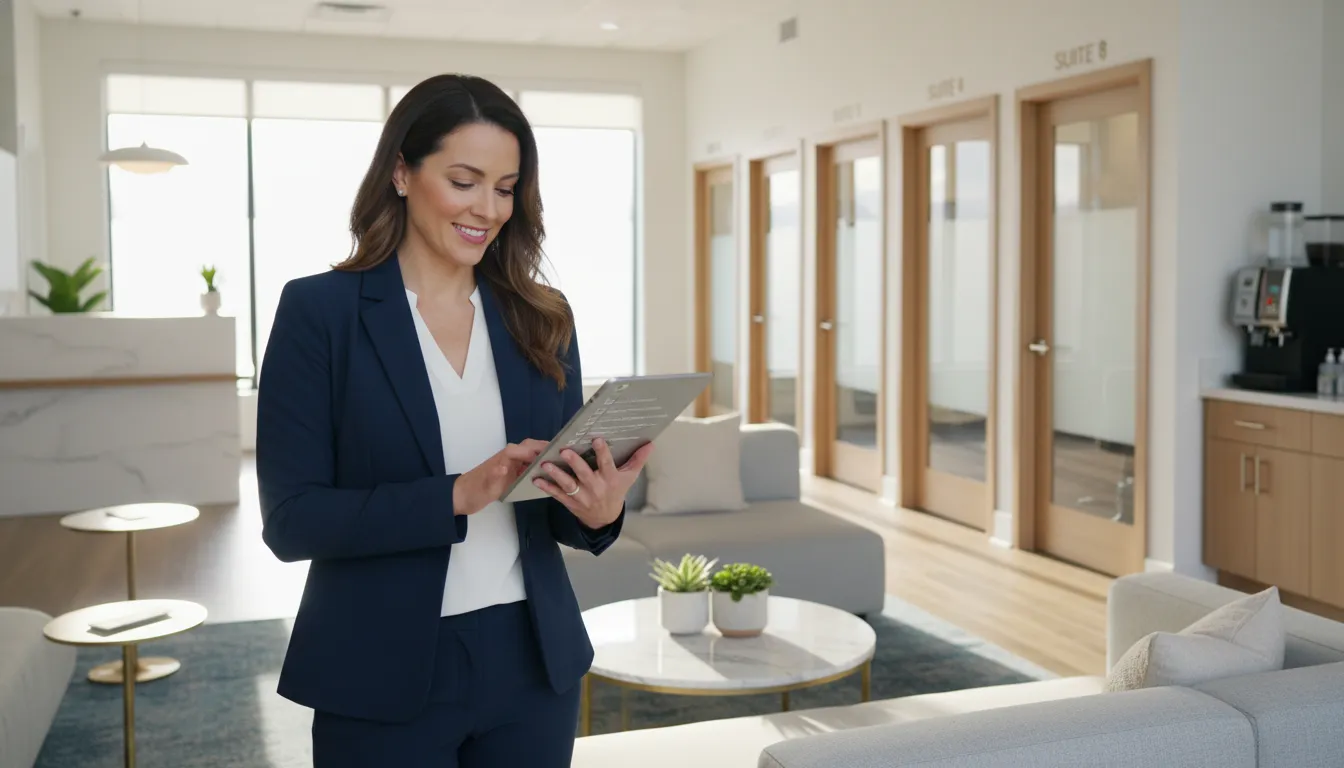
At a well-run location, a salon suite concierge manager helps set a steady daily rhythm for professionals and their clients. The role may include visible support, clear communication, and routine attention to shared spaces. These touchpoints show how onsite support can work in practice, while each location follows its own operating plan.
Opening readiness
A daily routine often begins before client traffic builds. The concierge manager can look for issues that affect the arrival experience, then route concerns through the right process. This practical focus reflects research on value-added property services, which includes lifestyle amenities and personal service.
- Check common areas, entry points, lighting, and visible supplies for a clean, ready appearance. Note repair or service needs for follow-up.
- Welcome beauty professionals and guests as schedules begin. A present onsite contact can answer basic location questions or direct requests to the proper resource.
- Receive day-to-day tenant requests, such as a shared-space concern or building question. Track the item, respond when appropriate, and escalate items that need owner or vendor action.
- Walk shared areas during active hours to help preserve a professional setting. This may include spotting clutter, reporting maintenance needs, or addressing simple courtesy issues.
- Share timely updates with suite tenants through the location’s normal channel. Notices may cover access, scheduled service visits, package handling, or events in common spaces.
- Close the loop near the end of the day by reviewing open items and noting next steps. Urgent issues can be routed promptly, while routine items stay organized for follow-up.
Support for independent professionals
This sequence is not about directing a beauty professional’s business. It is about helping maintain the setting in which independent professionals welcome their own clients. When shared details are handled with care, tenants have more room to focus on services, appointments, and their businesses.
Visibility for semi-absentee ownership
For an investor, regular touchpoints can make onsite needs easier to understand without requiring daily presence. The role of a concierge manager fits a semi-absentee structure because it places professional support at the location. Exact duties, reporting, and decisions depend on the local operating plan.
Tenant experience and investor oversight serve different needs
A salon suite concierge manager works close to the daily tenant experience. A prospective semi-absentee owner has a different job: reviewing how the location performs and how standards are kept. The roles connect, but they are not the same.
Support for beauty professionals
Independent beauty professionals need space that helps them serve clients and run their own businesses. An onsite concierge can address facility needs, support a professional setting, and be a visible contact at the location. This lets tenants keep their focus on appointments, client care, and their own business decisions.
That kind of support matters because service takes place in a shared property. Research on property management found that people respond to value-added and personalized services at the community level. The study does not predict salon results. It helps explain why reliable onsite support matters in a tenant setting. Read the property management services study for its findings.
Oversight for a semi-absentee investor
The concierge role does not remove owner review. A prospective investor should study operating expectations, staffing support, tenant demand, expenses, lease terms, and the measures used to track a location. The concierge manager franchise model can help an investor understand where onsite support fits within the broader business.
| Area. | Tenant need. | Investor review. |
|---|---|---|
| Daily setting. | Clean, professional workspace. | Standards and inspection process. |
| Point of contact. | Onsite help for facility concerns. | Manager role and reporting lines. |
| Suite activity. | Stable place to serve clients. | Leasing and renewal trends. |
| Business support. | Time focused on client work. | Costs, staffing, and budget controls. |
The table shows why one set of questions cannot answer the other. Pleasant service can help a professional use the space. It does not replace review of costs or lease assumptions. In the same way, financial reports do not show every issue a tenant meets each day. Both views deserve attention.
This split is useful during due diligence. Tenants judge day-to-day experience, while investors should review systems, reports, and risk. A staffed location can support operations, yet ownership still calls for informed review and clear accountability.
Questions worth asking
Before moving forward, an investor can ask how concierge managers are trained, supervised, and measured. Ask what tenant concerns the role handles and what matters are sent to ownership. These questions keep the focus on a working support system, not on promises of hands-off results.
What should an investor evaluate in the concierge model?
Accountability at the location
A salon suite concierge manager should not be viewed as a vague promise of help. Evaluate the role as an operating post with clear ownership. Ask who supervises the manager, how daily priorities are set, and which issues require owner review. A semi-absentee model still needs active accountability.
Start with the work that keeps the location consistent for independent professionals. That includes onsite presence, tenant communication, upkeep follow-up, and a process for handling concerns. The concierge manager franchise model gives investors a starting point for discussing how onsite management supports the business.
- Who covers the location when the manager is away?
- How are tenant requests logged, resolved, and reviewed?
- What standards are checked each day and each week?
- Which reports or updates reach the franchisee?
Service standards and support
Next, test whether the role is built around a reliable tenant experience. Beauty professionals run their own businesses inside the suites. They need a setting where facility issues and common-area standards do not become daily distractions. A manager’s value is easier to judge when the expected service actions are written down.
This question matters beyond the salon suite setting. Research on property management found stronger consumer receptivity to value-added services, including lifestyle amenities and personalized services. Investors can review that published property management study while assessing what onsite service is expected to deliver.
Also ask what support sits behind the onsite manager. Training, launch help, operating guidance, and escalation paths shape how well standards can be applied. A role description alone is not enough. Investors should compare stated duties with the brand’s resources, field support, and methods for checking quality.
Fit with semi-absentee ownership
A semi-absentee investor should define communication expectations before moving forward. Decide how often you expect updates, what events require a prompt call, and what decisions remain with ownership. This helps distinguish managed daily operations from owner oversight. It also prevents the word “semi-absentee” from becoming an unclear expectation.
Due diligence should include interviews, operating documents, and direct questions about manager selection and support. Review the franchise support and Concierge Manager role, then verify how it works in practice. Ask current franchisees about communication, service consistency, owner involvement, and support when an issue needs escalation.
- Request the stated Concierge Manager duties and performance review process.
- Ask how training and ongoing coaching are delivered.
- Speak with franchisees about normal owner time and manager communication.
- Confirm which decisions the owner must still approve.
Where franchise support meets onsite service
A local Concierge Manager and franchise support serve different parts of the same operating model. In a semi-absentee salon suite business, onsite presence helps keep daily tenant needs connected to a known point of contact. Broader support gives the franchisee a framework for operating the business with clear expectations.
Two layers of support
That distinction matters because service at a property can affect how people view their experience there. A published study on property management found stronger consumer receptivity to value-added community and personalized services. This does not define a salon suite program, but it supports a sound principle: reliable onsite service has value.
For a franchisee, the local role is part of a larger system, not a substitute for it. Salons by JC describes its franchisee support alongside the Concierge Manager role. That connection helps set expectations before an owner opens or grows a location.
Onsite presence and communication
The salon suite concierge manager is the onsite human presence in a semi-absentee model. Independent beauty and wellness professionals still run their own businesses in private suites. The concierge role supports the setting around that work; it does not replace each professional’s business choices.
Clear communication also keeps the owner’s view of the location grounded in daily reality. An owner should understand what the onsite role covers, what franchise support covers, and what decisions remain with ownership. That boundary is a strength, because support works best when responsibility stays visible.
Consistency starts with defined expectations. Tenants need to know where onsite questions go, while owners need an agreed way to stay informed. A clear structure can reduce guesswork without promising that every concern is solved by one role.
Investor responsibility
Onsite service does not remove investor responsibility. A franchisee remains responsible for evaluating the opportunity, making ownership decisions, and following the business requirements tied to the investment. Semi-absentee means managed onsite presence, not an absent owner.
Prospective owners can review the salon suite franchise model through this lens. How will onsite communication connect with broader support? A clear answer helps an investor judge whether the model fits available time, oversight needs, and long-term goals. The key is fit between consistent onsite service and active, informed ownership.
Why the experience matters to beauty professionals
For independent beauty professionals, private workspace is part of running a business. They choose their service menu, build client ties, and shape each appointment. A salon suite concierge manager does not replace that ownership. The role supports a setting where professionals can welcome clients and keep attention on their work.
Less friction during the workday
Daily friction can pull attention away from booked services. Questions about shared areas, the site experience, or routine needs still arise in a private-suite setting. An onsite contact gives professionals a clear place to raise those needs. That matters because each tenant is also managing a client-facing small business.
A suite can be private without leaving a professional isolated when common issues arise. If a shared amenity needs attention or a visitor has a site question, an onsite manager can receive it. That separation helps keep the service provider’s time tied to clients and their own business choices.
Research on value-added property management services found stronger consumer receptivity to personalized services and shared amenities. Salon suites are a distinct setting, but the practical lesson is relevant. Reliable support can make a workplace easier to use.
Independence with practical support
Independence works best when professionals can focus on the parts of business they alone control. That includes consultations, services, schedules, pricing, retail choices, and client follow-up. A professional environment can help reduce small disruptions without directing the tenant’s craft or business decisions.
Within the concierge manager franchise model, onsite support is part of the workspace experience. For a beauty professional, this can mean a consistent contact for common-area concerns and day-to-day site questions. Clients may not see the support role directly, but they can experience the surrounding setting.
A workspace professionals can assess
Beauty professionals often weigh more than square footage when choosing a suite. They may consider privacy, client arrival, upkeep of shared spaces, and whether help is easy to find. Those details affect daily use of the workspace, while the professional remains in charge of the business.
The tenant relationship is built through many ordinary interactions, not one headline feature. A salon suite concierge manager can be a steady point of contact in those interactions. For adjacent reading on this business issue, see salon suite tenant retention.
Request franchise information to evaluate a concierge-supported salon suite investment.
Frequently Asked Questions
What does a salon concierge do?
A salon suite concierge manager handles daily onsite operations and helps maintain a professional setting for independent beauty professionals and their clients. The role may include greeting visitors, responding to tenant needs, coordinating facility issues, and supporting smooth day-to-day service. Salons by JC describes its Concierge Manager as a key support for the semi-absentee franchise model.
What are the roles and responsibilities of a salon manager?
In a salon suite franchise, management centers on the shared business environment, not on providing each tenant’s beauty services. A manager can oversee facility standards, tenant communication, guest experience, routine issues, and leasing support. This allows independent professionals to run their own businesses while the location maintains consistent onsite support and accountability for the franchise investor.
What qualifications do I need to be a concierge?
Concierge manager requirements vary by employer and location. Strong candidates typically bring customer service skills, clear communication, organization, and comfort handling facility or tenant concerns. Experience in hospitality, leasing, or salon operations may be useful for an onsite role. Investors reviewing a salon suite franchise should understand that the concierge function supports operations without requiring the investor to provide beauty services.
How much do salon managers make in the US?
Salon manager pay varies by market, experience, work schedule, duties, and whether the role includes leasing or occupancy responsibilities. A salon suite concierge manager may have a different compensation structure than a service-based salon manager. Franchise investors should evaluate local hiring conditions and documented operating costs rather than relying on a single national salary figure for planning.
Ready to Explore Concierge-Supported Ownership?
When daily tenant needs lack consistent onsite support, service gaps can consume owner attention and create avoidable friction for independent beauty professionals. Waiting to explore an operating plan can delay your ability to compare responsibilities, staffing support, and the fit for semi-absentee ownership. Starting now gives you time to ask focused questions, understand tenant support expectations, and consider a franchise opportunity with clearer priorities.
Ready to see how a Concierge Manager can support your ownership goals and the day-to-day tenant experience? A timely conversation can help you decide what to evaluate next. Request franchise information to review the model, discuss your investment interests, and contact the team about practical next steps for your evaluation.