Author
Eliana RodriguezPublished
Apr st, 2026Category
Blog GuidesSemi-absentee franchise ownership lets investors build a business that generates recurring income without requiring full-time involvement. Unlike traditional franchise models where the owner works in the business every day, the semi-absentee approach puts a hired manager in charge of daily operations while you focus on strategy, financial oversight, and growing your portfolio.
Request a free consultation with Salons by JC to learn how the salon suite franchise model works for semi-absentee investors.
For investors with capital to deploy, this model fills a gap that stocks, bonds, and even rental real estate cannot. You get the tax advantages of business ownership, the predictability of a proven system, and the operational support of a franchisor. But semi-absentee ownership is not passive income. It requires the right franchise, the right manager, and a clear understanding of what your weekly commitment looks like.
This guide breaks down exactly how semi-absentee franchise ownership works from an investor’s perspective, with a focus on the salon suite model that has made this approach especially attractive in the beauty and wellness industry.
What Does Semi-Absentee Franchise Ownership Actually Look Like?
Semi-absentee franchise ownership means you own the business but do not manage its daily operations. Instead, you hire a general manager or concierge manager who handles tenant relations, facility upkeep, local marketing, and the small day-to-day decisions that keep things running.
Your role as the owner shifts to high-level oversight. Expect to spend 10 to 15 hours per week on activities like:
- Reviewing financial reports and key performance indicators
- Holding weekly check-ins with your manager
- Monitoring occupancy rates and tenant retention
- Approving marketing spend and lease agreements
- Planning for expansion or capital improvements
This is not the same as fully absentee ownership (2 to 5 hours per week with zero operational involvement) or owner-operator models (40 to 60 hours per week). Semi-absentee sits in the middle and works best for investors who want to stay involved enough to protect their investment without making it their full-time job.
The first 12 to 18 months typically require more hands-on involvement as you build your team, establish systems, and stabilize operations. After that initial period, most owners settle into the 10 to 15 hour weekly rhythm.
Why Salon Suite Franchising Fits the Semi-Absentee Investment Model
Not all franchises are built for semi-absentee ownership. Service businesses that depend on the owner’s expertise, restaurants that require constant quality control, and retail operations with high employee turnover all make stepping back difficult.
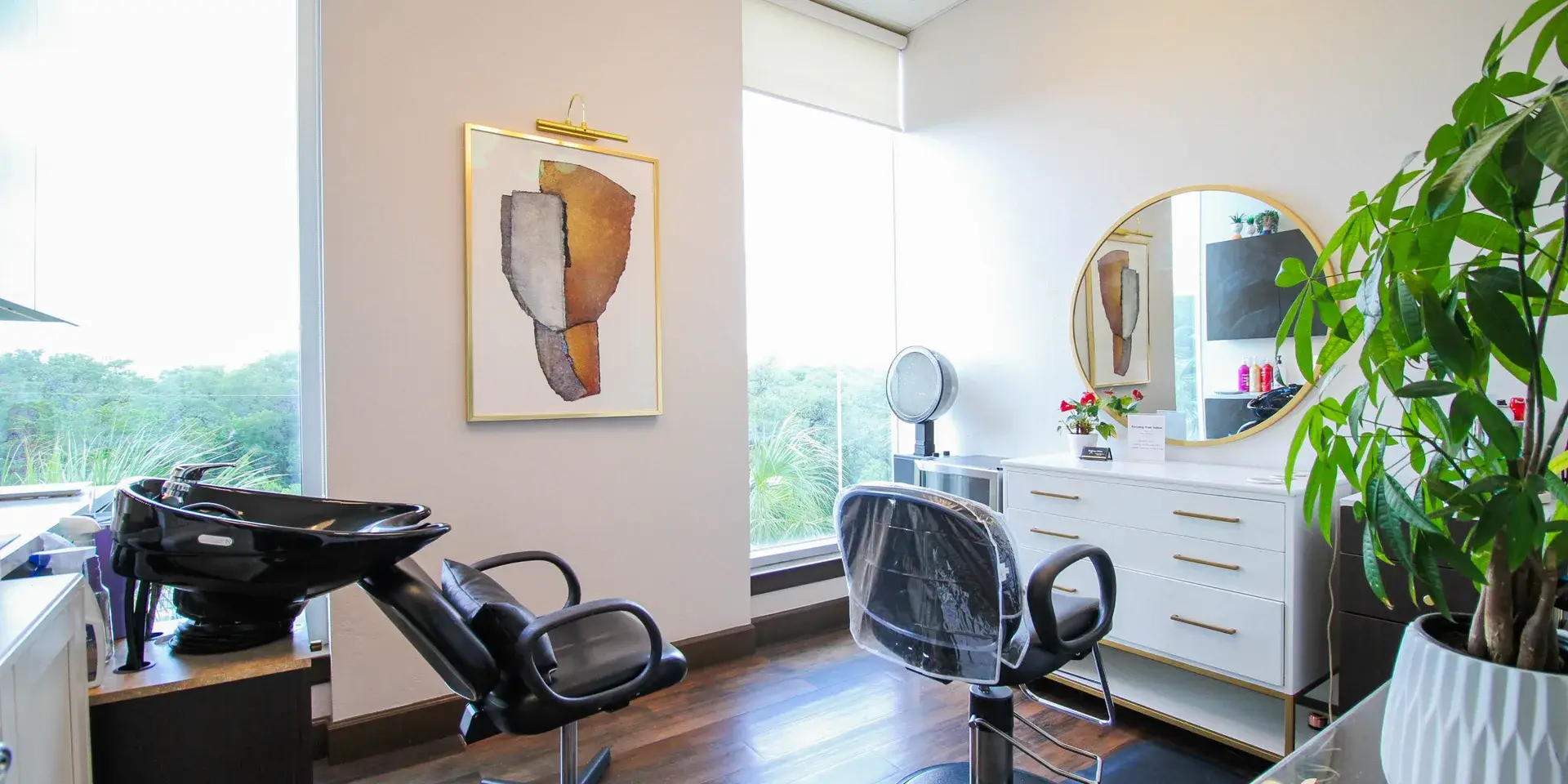
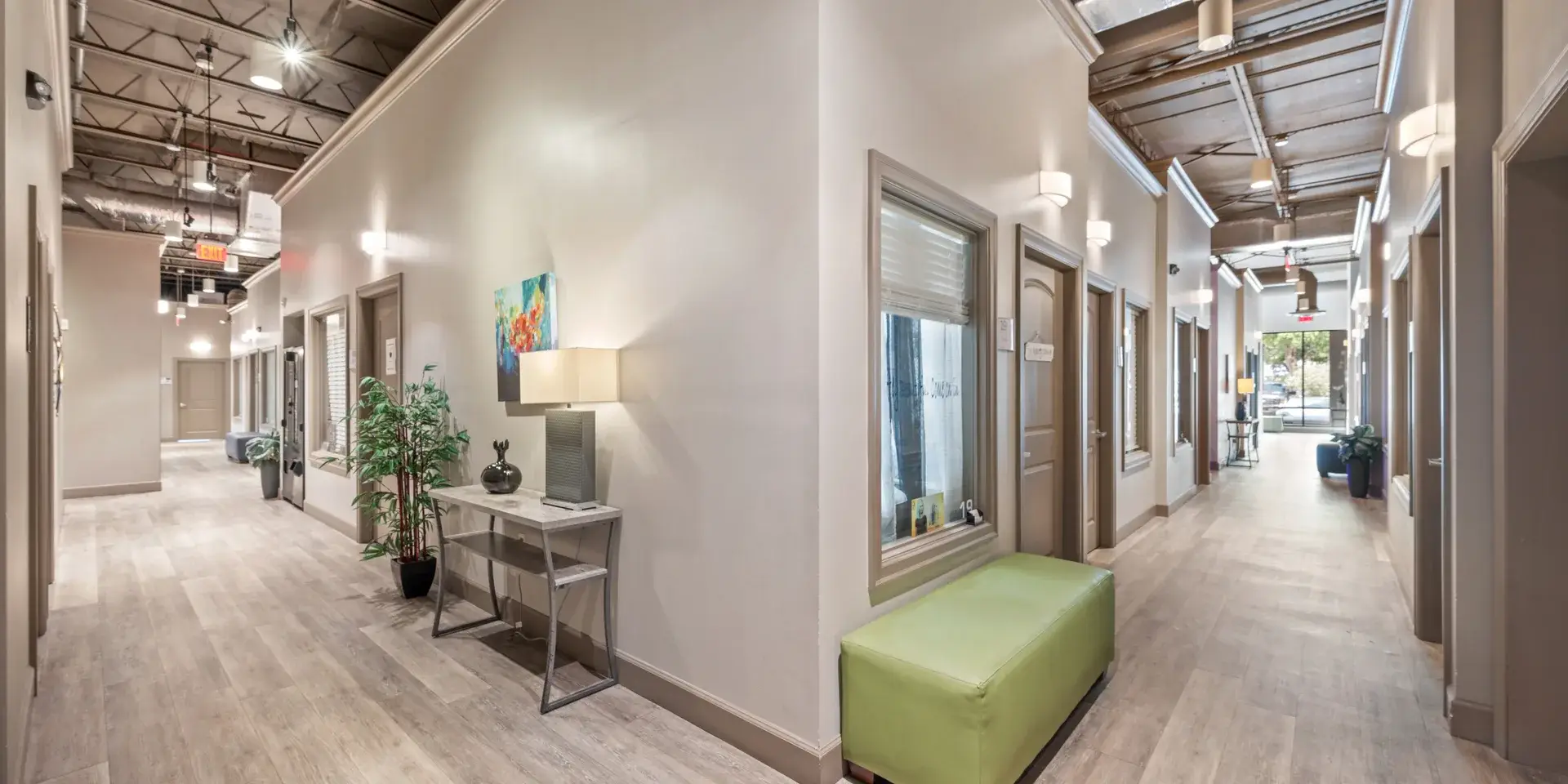
Salon suite franchising works differently. The Salons by JC franchise model operates more like commercial real estate than a traditional business. You are the landlord. Licensed beauty professionals (stylists, estheticians, barbers, nail technicians) lease individual suites within your facility. They bring their own clients, set their own prices, and manage their own schedules.
This structure creates several advantages for semi-absentee investors:
- Diversified tenant base: A single location may have 20 to 50+ tenants, so losing one does not significantly impact revenue
- Recurring monthly income: Tenants pay monthly suite rental fees, creating predictable cash flow similar to apartment investing
- No inventory, no food costs, no complex supply chain: The operational simplicity reduces what can go wrong
- No salon experience required: You are managing a real estate operation, not cutting hair
- Built-in management layer: Salons by JC provides a Concierge Manager model designed specifically for semi-absentee owners
The U.S. salon industry generates over $46 billion annually, and the suite rental segment continues to grow as more beauty professionals prefer independent operation over traditional salon employment. That demand for suite space is what drives your occupancy and revenue.
The Financial Structure Investors Need to Understand
Salon suite franchising is a premium investment. The total initial investment for a Salons by JC franchise ranges from approximately $1.42 million to $2.17 million. That number includes leasehold improvements ($1.08M to $1.62M), furniture and equipment ($156K to $214K), architectural plans, initial marketing, and operating capital.
Qualification typically requires a net worth of at least $2 million and $750,000 in liquid assets. This is not entry-level franchising. It is designed for investors who have the capital to execute and the patience to build.
Revenue is driven by one primary metric: occupancy. Your income scales with the number of suites leased at any given time. Understanding how occupancy affects your returns is critical:
| Occupancy Rate | What It Means for Your Investment |
|---|---|
| Below 60% | Pre-stabilization phase. Common in the first 6 to 12 months. Revenue covers some operating expenses but likely not debt service. |
| 60% to 80% | Stabilization. Revenue covers operating costs and begins servicing debt. Most locations reach this range within 12 to 18 months. |
| 80% to 95% | Mature operation. Strong cash flow with healthy margins. This is the target for a well-run location. |
| Above 95% | Near-full occupancy. At this point, expanding to a second location becomes financially viable. |
The recurring nature of suite rentals gives this model a financial profile closer to apartment investing than to most franchise businesses. Tenants sign leases, pay monthly, and tend to stay for years when the facility is well-maintained and well-located.
Thinking about the numbers for your market? Request a free consultation to discuss investment details and territory availability with Salons by JC.
How to Finance a Semi-Absentee Salon Suite Franchise
A $1.4M to $2.2M investment requires a financing strategy. Most salon suite franchise owners use one or a combination of these approaches:
- SBA 7(a) loans: The most common route for franchise financing. SBA loans offer competitive interest rates and longer repayment terms. Many lenders specialize in franchise lending and are familiar with the salon suite model. Review your franchise financing options before committing to a structure.
- Conventional bank loans: Available for borrowers with strong credit and significant collateral. Terms may be less favorable than SBA, but the approval process can be faster.
- ROBS (Rollover for Business Startups): Allows you to use retirement funds (401k or IRA) to invest in your franchise without early withdrawal penalties. This approach requires careful legal structuring but eliminates debt entirely.
- Tenant Improvement (TI) allowances: Many commercial landlords offer TI dollars as part of the lease agreement, which can offset a portion of your leasehold improvement costs.
- Partnership structures: Some investors bring in a capital partner to share the investment and returns. This can work well for first-time franchise owners who want to reduce personal risk.
Understanding the full picture of franchise fees and ongoing costs before signing is essential. Beyond the initial investment, you will have ongoing royalty fees, marketing fund contributions, rent, insurance, and manager compensation.
What Makes a Franchise Truly Semi-Absentee Friendly?
Not every franchise that advertises “semi-absentee” actually supports it. Before investing, evaluate these five indicators:
- Built-in management structure: Does the franchisor provide a management model, or do you have to figure out staffing on your own? Salons by JC includes a Concierge Manager role and franchisee support designed for owners who are not onsite every day.
- Low operational complexity: Fewer moving parts mean fewer reasons you need to intervene. A salon suite operation has no inventory, no food safety concerns, and no hourly staff to schedule.
- Recurring revenue model: Businesses that depend on daily transactions (restaurants, retail) require constant attention. Businesses with monthly contracts or leases (salon suites, self-storage) produce steadier income with less owner involvement.
- FDD Item 15 language: The Franchise Disclosure Document tells you how the franchisor expects the business to be run. Look for explicit language permitting semi-absentee or manager-run operations.
- Multi-unit track record: If existing franchisees are successfully running multiple locations, the system can clearly operate without the owner onsite at each one. Ask for references during your validation process.
Scaling to Multiple Locations
One of the strongest advantages of the semi-absentee model is scalability. Once your first location stabilizes (typically 18 to 24 months after opening), the systems and management structure you have built become a template for expansion.
Here is how most multi-unit salon suite franchise owners approach scaling:
- Stabilize unit one: Reach 80%+ occupancy with a reliable manager in place and consistent cash flow for at least 6 months.
- Secure additional territory: Area Development Agreements with Salons by JC let you lock in exclusive rights to specific zip codes for future locations.
- Replicate the manager model: Your second location needs its own Concierge Manager. The hiring criteria and training process you refined at location one now apply directly.
- Centralize oversight: With two or more locations, many owners hire a regional operations manager or use the franchise systems to monitor all locations from a single dashboard.
Multi-unit ownership also creates operational efficiencies. Marketing costs per location decrease, vendor relationships improve with volume, and your experience closing leases and managing tenant turnover accelerates. Investors who start with a single location and a clear expansion plan often find that the second and third locations require significantly less of their time than the first.
Due Diligence: What Investors Should Evaluate Before Committing
Smart franchise investing starts with thorough due diligence. Here is a framework for evaluating a semi-absentee franchise opportunity:
- FDD Item 7 (Initial Investment): Understand every line item. Ask what typically comes in at the high end versus the low end in your market.
- FDD Item 19 (Financial Performance Representations): If disclosed, this shows actual revenue and expense data from existing franchisees. Not all franchisors include Item 19, but it is the most valuable data point for investors.
- Validation calls: Speak with 5 to 10 existing franchisees. Ask about their actual time commitment, how long it took to stabilize, and whether the semi-absentee model works in practice. Focus on owners who have been open for 2+ years.
- Market research: Evaluate local demand for salon suites. How many licensed beauty professionals are in your territory? What are competing facilities charging? Is the market growing or saturated?
- Manager compensation and retention: Ask the franchisor what competitive pay looks like for a Concierge Manager in your area. High manager turnover is the biggest operational risk in semi-absentee franchising.
- Lease terms: Your commercial lease is the largest fixed cost. Negotiate TI allowances, rent abatement during build-out, and favorable renewal terms.
Taking the time to review the franchise investment opportunity from every angle protects your capital and sets realistic expectations for returns.
How Semi-Absentee Franchise Ownership Compares to Other Investments
Investors evaluating semi-absentee franchising are usually weighing it against other income-generating investments. Here is how the salon suite model stacks up:
| Investment Type | Typical Time Commitment | Income Profile | Key Consideration |
|---|---|---|---|
| Semi-absentee salon suite franchise | 10 to 15 hours/week | Recurring monthly rental income; grows with occupancy | Franchisor systems reduce learning curve; manager handles operations |
| Rental real estate (residential) | 5 to 15 hours/week | Monthly rent; appreciation over time | Tenant management, maintenance, vacancy risk; less diversified (fewer units) |
| Commercial real estate (NNN lease) | 2 to 5 hours/week | Stable long-term lease income | Lower returns; large capital requirements; limited control over property use |
| REITs / real estate syndications | 1 to 2 hours/month | Dividend income; fund-level returns | Fully passive but no operational control; returns vary with fund manager performance |
| Stock portfolio / index funds | Minimal | Market returns; dividends | No tax advantages of business ownership; no control over returns |
Semi-absentee franchise ownership occupies a middle ground: more hands-on than passive investments like REITs, but with significantly more control over outcomes. The key differentiator is that franchise systems, training, and brand recognition reduce the risk that comes with starting a business from scratch.
Frequently Asked Questions
What is the difference between semi-absentee and fully absentee franchise ownership?
Semi-absentee owners spend 10 to 15 hours per week on their franchise, focusing on financial oversight, manager check-ins, and strategic decisions. Fully absentee owners spend 2 to 5 hours per week and rely almost entirely on a management team. Most franchises that advertise absentee ownership are semi-absentee in practice, especially during the first 12 to 18 months.
Do I need salon or beauty industry experience to own a salon suite franchise?
No. The salon suite franchise model is a real estate operation, not a beauty services business. Your tenants are licensed professionals who manage their own clients and services. Your role is facility management, leasing, and business oversight. Salons by JC provides training, operational systems, and ongoing support so that no prior industry experience is needed.
How long does it take for a salon suite franchise to become profitable?
Most salon suite franchise locations reach operational breakeven within 12 to 18 months as occupancy builds. Full stabilization with strong margins typically occurs between 18 and 24 months. The exact timeline depends on your market, location quality, and how effectively you fill suites during the initial lease-up period.
Can I keep my current job while owning a semi-absentee franchise?
Yes. That is one of the primary advantages of the semi-absentee model. Many Salons by JC franchise owners are corporate professionals, real estate investors, or multi-unit operators who manage their franchise alongside other career or investment activities. The 10 to 15 hour weekly time commitment is designed to fit around a full-time schedule.
How much does it cost to open a Salons by JC franchise?
The total initial investment ranges from approximately $1.42 million to $2.17 million, depending on market, location size, and build-out specifications. Qualification requires a net worth of at least $2 million and $750,000 in liquid assets. Review the full franchise fees and cost breakdown for details.
What kind of returns can I expect from a semi-absentee franchise?
Returns depend on occupancy rates, operating expenses, and market conditions. Franchise systems do not guarantee specific income levels. The best way to evaluate potential returns is to review the Franchise Disclosure Document (FDD), speak with existing franchisees during validation, and work with a franchise financial advisor to model scenarios based on your specific market. Learn more about franchise ROI and what factors drive returns.
Take the Next Step
Semi-absentee franchise ownership offers investors a path to recurring income backed by a proven system, a strong brand, and a real estate model with built-in demand. The salon suite industry continues to grow as beauty professionals seek independence, and the Salons by JC franchise has been recognized on the Entrepreneur Franchise 500 for six consecutive years.
Whether you are looking to diversify your investment portfolio, build a multi-unit operation, or create a business that does not require your full-time attention, the semi-absentee salon suite model is worth evaluating.
Request your free franchise consultation today to learn about available territories, investment details, and how franchise owners are earning with Salons by JC.